Tag Archives: Writing

Killer Hot Tubs

When on vacation with friends of a certain age, I find we are on different pages in terms of our interests and willingness to take on risk. For some of us–okay–for me, I prefer to pace myself by moseying, always moseying over to the pool. Perhaps a little saunter out to the balcony or deck, or screened in back porch. Shopping, well, yes, but as the sun sets, not during the heat of the day. A nice sprawl in front of the TV anytime.


Mornings I search for clues of the rapture, because by the time I arise the place is empty and devoid of human life except my own, as I slink — inside I slink–to the coffee maker, retrieve a mug, as long as it is sitting shoulder height or lower. My friends are out walking, biking, I don’t know what all, but more power to them.


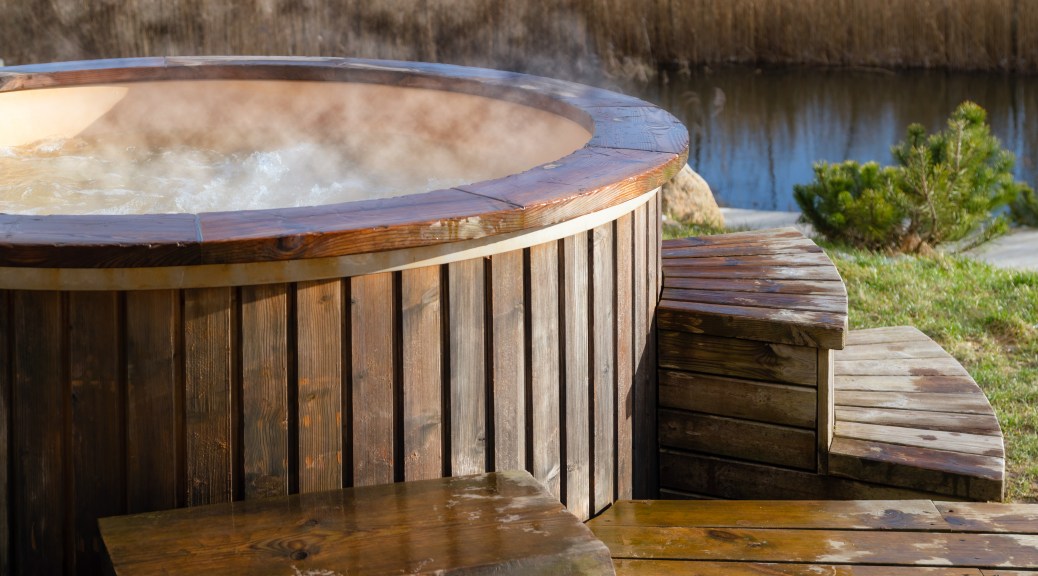
Often on vacation there will be a hot tub, either attached to the place we are staying or in the lovely commons area out by the pool. One particular friend loves a hot tub about all things, especially at resorts and she keeps hitting the button–that one there, just below the red warning sign indicating the need to limit time in the hot tub. As wanton as a hussy she ignores the admonition and overcooks and why don’t I join her, what a great way to chat with people and find out good restaurants? No. I am pretty sure hot tubs kill.


And now we have proof, this cautionary tale from out to the east of us.
Two women, both in their eighties, were enjoying the hot tub at the cabin where they were staying with friends for a girls’ trip. When they tried to get out, they couldn’t. Mobility issues, pre-existing conditions, every news outlet reported. They became overheated, as you do, and then became unresponsive. Their friends couldn’t retrieve them either, but managed to jump in and hold their unconscious heads above water until help arrived — at their remote cabin in a remote area of Red River Gorge, and both women came close to succumbing to their relaxing dip in the hot tub.


Trips to the hospital packed in ice revived them, but still.


What were they thinking?


What are my buddies thinking when they keep adding time to the hot tub when the big red signs say not to. I joined them once, and when I got out on the trembly legs of a new-born fawn, I walked three feet and thought I might faint. Explain to me the appeal. I won’t even sit with my feet dangling over the side, anymore.


And I am not eighty.


But I am not a spring chicken, either. And since last December I have had a horrifying glimpse of what it is like to have “mobility” problems, what with a hip flexor injury taking its own sweet time to heal, and all the accompanying aches and pains that come with it–the over-stressed knee that has never caused me problems, until now. The knotted up rhomboid in my back that reacts to my bad posture and my ungainly gait, the one that likes to kick into spasm just as I drift off to sleep.


So, I am not without sympathy, but surely some common sense might be in order.


In exactly one month I will be on my own girls’ trip, in a large house somewhere near the Bourbon Trail, with its own hot tub, I imagine. There will be discussions about who should have what bedroom because this one can’t do stairs, that one wakes early and needs to be close to the coffee pot, another one hardly sleeps at all and needs to wander the premises all night long.


Not to be a spoiled sport, but I would rather not be called upon to hold one of their heads above water until the squad arrives. I would do it. But I would resent it. Because, forget about the temperature for moment, what about the quality of that water and all those flesh eating bacteria?

What about those?


No, I believe I will continue to mosey, to slink and to sprawl on fat furniture. I will swim in the big garden tub in my room, I’ll relax, sitting on my spine, reeking of Tiger Balm, and catch up on Netflix.


Y’all have fun out there in that tub, and keep 911 on speed dial. I’ll let them in if I’m getting up for snacks.

Breaking the Ice

Consider the ice pick. So simple, so understated, possessing a design that has not changed since the 1800s. Basically a wooden handle with a metal collar holding a thin, rounded blade in place. Perfectly balanced, with its beveled handle a comfortable two and half inches long, fitting sweetly in the palm, fingers resting gently on the smooth sanded edge, a grip comfortable and secure.


Lightweight, just this short of flimsy, but no. In that first downward dagger motion, the motion with the hand held high and a moment’s hesitation before crashing into the ice, it becomes evident, immediately and with a certain pang of guilt, this energy, this attack is not necessary, requires no gritted teeth, no concentrated strength. We understand in that moment the ice pick is perfectly suited for its job.

It is substantial, yet requires no force, no finesse. It just performs. If it were mechanical, it would hum. And hum and hum and hum in comforting perpetuity.


We may be forgiven the momentary lapse of judgment when we first pick up the ice pick.


We have before us a big bag of commercially made ice, ten or fifteen pounds worth. We bring it home because we plan a party, and some of it will be go into a cooler and some of it will be used for drinks. And all of it clumped together in a mass of frustrating, aggravating finger-burning coldness, making a mess of the counter and the floor.


First we do the the floor whomp, banging it down with might, thinking this will loosen it up. It does, but only the last little bit of ice in the bottom of the bag, that ice which will never see the inside of a glass or an ice bucket. Next, the butter knife, preferred by women, a steak knife preferred by men. Forgive the incorrectness of this, but it bears a truth not easily denied. Both methods equally ineffective, although the sharper the knife the more dramatic the failure, with those little piercing shards of ice flying around and melting on contact with the counter.


In organized households perhaps someone takes the hammer to it, the little tack hammer in the drawer there, the one used for hanging pictures and not much else. In my household, it is the first heavy object at hand; the corkscrew, the manual can opener, one time a can of tomato paste.
But no. An ice pick, and only an ice pick will do.


And who has one of those lying about?


Not I.


Until last week, when I had just about had it. For months I have struggled with big bags of ice or going without ice altogether, the difficulty of a glass of iced tea enough to unhinge me. The reason, simple. I do not have an ice maker. Imagine it. I still can not. But a glitch in my kitchen design means I am lucky to have a no frills fridge at all and forget about one with a factory installed ice maker.


No worries, I thought. I have the old fridge in the garage, I can store bags of ice there, and make my own ice cubes, anyway, circa 1962. I gave myself much for credit for energy and motivation. I overestimated my ability to remember to buy ice, I underestimated the ease of making my own ice cubes. Gone are the industrial aluminum ice cube trays with the lever that ejected twelve ice cubes at a time.


We thought walking across the floor with those filled with water was delicate. Try it with the tiny ice cube trays all floppy and made of silicone. I went in search of an ice pick. I found one, and of course I found it at my neighborhood hardware store. And when I say I found one I mean, I told the guys at the counter what I needed and they walked me to the back of the store to get one. Sometimes they go and fetch me things but that afternoon I needed the exercise.


It was just like the one my grandmother might have purchased. Just like my grandmother had, in fact. Just like the one we probably threw away when cleaning out her house that last time. A simple tool, elegant and efficient in the way it bends to its one task with ease. Dangerous looking. Much maligned, a horror film cliché. And yet, my new beloved.

HEAT WAVE

There was a heatwave, not unlike this one. I was living in Bowling Green then, my sister was spending the summer with me, taking classes, and we were fiends for tennis. Boys wouldn’t play with us. Well, they would, but they didn’t like it.


We hit the courts one fine bright noon. Kathy remarked how deserted it was. We had our pick of courts with the sun bearing down on them, our little water bottles sweating in our hands. “Where is everybody?” she wondered.

“Inside, where they belong,” I replied. “You know people are dropping like flies, right?”


“Huh? “

“This heat, it’s killing people from Chicago to Memphis and anyone with sense is in the air conditioning, if they can find it.”


She looked blank, I shrugged, like it was of no more importance than if I was passing along something interesting I had just read about King Tut’s tomb. We played three sets of tennis, and feeling fine, but not total idiots, decided maybe we should go in search of some air conditioning, too.


We gathered our cans of balls, our tennis rackets and tiny tennis towels, our skimpy water bottles and took ourselves off home.


What I remember most about that afternoon is this. We were young, not too bright, and as fit as we ever were or ever would be. We were golden.


I write this in a chair that rocks, swivels and is in possession of a matching ottoman upon which my feet rest. The sprinkler rakes the big windows to my right, but I am not going out there any time soon to turn it off. I calculate the window of safety in which I might venture out to save my plants. It is a grave kind of arithmetic, even though, while it is hot, I have been hotter, and I am not sure it is so awful out there. I mean, it feels bad, but not that bad. Yet, I peek through the drawn blinds — no I don’t, I wrote that for effect — and take my pulse and try to remember when I last hydrated.


Because now I’m old.


Decidedly unfit.


And if I am honest, a bit of a scaredy cat.


There have been medical issues, not many or long-lasting enough to say I have a (fill in the blank) condition. But I creep around like maybe I do. I stay out of hot tubs, am cautious in a sauna, I weigh up my stamina for a walk around the neighborhood.


As if I could walk around neighborhood, anyway. I am almost recovered from a wonky hip issue, one that has vexed me since Christmas. The pain has migrated all over the place and is now, I think, in the last and only place left to be. And I am so much better. I can pick stuff up off the floor now. But it has gotten my attention.


I suppose I’ll never hold another tennis racket. I can’t get a bead on pickleball, and I suspect it is a pride thing. And while I have never been the biggest fan of summer, I have a soft spot for the girl I was once in it. The one with that backhand, the mean second serve. That one, who thought nothing of tennis at high noon, and 96 degrees. That one, who was always game, even if she wasn’t always best suited for the weather. I want a piece of her back.


She would be out there right now, mulching or pulling weeds, She wouldn’t care if it was hot. She would be at the nurseries this afternoon, looking for plants. Come home. Dig some holes. Maybe I need to quit twitching the curtains and just go out there to meet the day, whatever kind of day it is. If I only make it to the porch to drink iced tea, well, that is something, too.

A Slothful New Year

For as long as I can remember the week between Christmas and New Year’s was its own thing, suspended in a weird time space continuum, where, about mid-week, we awoke, all fuzzy and confused, not knowing the day, much less the time.


Then COVID, and we spent almost two years suspended and unaware of the calendars growing cobwebs on our walls and desks and in our purses. It robbed us of a great deal, but especially that delicious sense of floating through a day, a week, innocent as babes. We COVID we floated a lot longer.


It is my favorite post-Christmas activity–falling asleep sitting up, at nine, at noon, at three. To fall asleep at the drop of a hat is charming, especially after all the activity and stress of holiday preparations, the buzzing of chores banging around your brain just as you lie down for the night, the hectic activity to make things perfect, although the slobs for whom the effort is made never notice, and certainly never toss a compliment your way.


My niece, the young mother of a two-year old and ten-month old twins couldn’t believe how tired she was, how much she craved sleep two days after she threw a family celebration for thirty people. There were kids running everywhere, games going on, food to be refreshed, toys to corral and corral again. And please don’t step on the babies.


Two days later, nestled in a corner of the couch, she thought she was coming down with something. Well, yes, she was coming down, but not with a virus. She was coming down from the holidays. I think she hadn’t experienced it before. I get it. When I was younger, the week between the holidays was dedicated to meeting up with friends, sleeping late and making excuses to avoid lesser family obligations. About the only thing I had to do was laundry, and that was so I would look cute when I went out–every night.


I am in awe of how she and her husband do it. This year they have moved, worked on the house, with three children two and under, kept that house tidy and inviting. They speak sweetly to the babies, work hard all the time.


But, eventually, everyone’s energy runs out, and for the first time ever, you don’t know what day of the week it is. And that was Kate on Monday. While she took a bath, I played with Gretchen, who is named for my mother, but I pretend she is named for me, too. We have fun, old Gretch and I, when she isn’t glued to Miss Rachel.


Katie seemed genuinely surprised to learn that sleepy feeling after the holiday was perfectly normal. That some of those yawns signaled a state of relaxation, not just exhaustion. She hadn’t connected those dots, but it’s true.


I’m not very good about knowing what I am feeling from one moment to the next. I’ve trained myself to take a moment, check in with myself, but I’m not always successful at it. But I have nailed, absolutely nailed, a high level of sloth between Christmas and New Year. It rejuvenates me.


Then, in these first gray days of January, I keep the feeling going. Gently. I get moving a bit more, take down the tree, organize a closet, or at the very least, my purse. But what else should we do in these first weeks of January? Nothing, I tell ya. I watched several documentaries about medieval Christmases, where no one worked at all between Christmas Eve and Twelfth Night, which is January 6, Epiphany. It surely kept the letdown at bay. And the holiday was given so much space and attention, with a new feast or celebration on almost every single day.


Such a contrast to the way we run around, shop, wrap, bake, decorate for a month or more, all frazzled and cranky, culminating in a twenty minute meal and a short frenzy of flying wrapping paper and spilled eggnog. In the absence of a medieval celebration, I think I will keep the holiday going in my own little way. Ease into the New Year, nothing much doing until the day after Epiphany. Join me.

Reading Capote

I first knew Truman Capote as caricature of himself—the flamboyant and outrageous guest on late night television, a gigantic personality in an elfin body.  He wore hats, as I recall from those stolen glimpses of Johnny Carson on those rare nights I was up to see him.

He spoke of his “dear, dear friend” so-and-so, shamelessly name-dropping, slow-rolling his southern drawl as he rolled his eyes, this feline, no, catty little man, perched on a famous talk show couch, past his prime and at that point in time, mostly famous for being famous.

As he struggled sometimes to recall the dear, dear friend, Carson would try to help him move things along, tossing out the name of some likely celebrity.

“Oh, no,” Capote would simper.  “He is a dear friend, but not the dear, dear friend I am thinking of.”  This would go on for several minutes, this naming, and claiming and denying. I was in my teens and didn’t quite know what to make of it.  Except that, for all the good-natured banter, he seemed to be an object of subtle ridicule, and that made me sad because I didn’t know who he was or why he was there.

This was before I read his writing, before I was given “A Christmas Memory” to read in Freshman English, before I had heard of “In Cold Blood,” before I was introduced to the classic film, “Breakfast at Tiffany’s.”

Before I knew much about anything, really.

Capote  first appeared on my radar screen in high school, when my friend, Patty, read  “In Cold Blood,” his account of a real-life murder in Kansas.  One evening we were at a party, or hanging out somewhere other than her house—which was odd, because she had the best house for lallygagging teenagers and we were there all the time.

She spent a nervous evening calling her home phone to make sure it still worked, or to make sure that there wasn’t a busy signal, or something like that. I can’t remember the specifics now, but it was all rooted in fear because of some passage in the book. Obviously there was some monkey business with the phone that the murderers employed as they went about systematically killing the Clutter family.

The book terrorized her for weeks and I made an conscious decision to never read it.  And I haven’t.

It is perhaps his most famous work, a piece of nonfiction that changed the way sensational stories were covered from then onward.  It may have been the last great thing he wrote.  It made him famous, or more famous, that is certain.  It may have ruined him, that is debated. 

My book group is reading “Other Voices, Other Rooms” for May, and the title alone makes it worth picking up.  It is a novel, but one with strong threads of autobiography, as many of his works share when they are set in the deep south, with a young abandoned boy sent to live with relatives, all of whom are southern gothic as all get out.

Even though the themes can be  familiar from one book to the next, there is something fresh about each story, too.  He was a superb story-teller, vivid and unsentimental.  He must surely have been damaged by his early traumas and abandonment, and even perched on an oversized chair on a television set, he seems small and fragile, a child hanging on to something delicate inside him, delicate but heavy.  A thing easily dropped and shattered.

You might have come across Truman Capote in a literature class.  His story, “A Christmas Memory” is widely taught and anthologized.  It is the story of a small, displaced boy and his eccentric cousin, Miss Sook, who isn’t quite “right,” but then, we suspect, neither is Buddy, this little boy who is more comfortable in the world of misfit adults, than with friends his own age.

He isn’t odd, exactly, but his is different, and it makes us champion him, root for him.  Perhaps it is the unemotional way in which his stories unfold.  Regardless, we help him pull the wagon as he and Miss Sook go around the countryside gathering up pecans, candied fruits and whiskey to make the annual fruitcakes. 

I think I will read all his works this year, in order. I admire his deftness as a writer, his description and detail.  But his characters, ah, his characters.  Those I unlock my heart for, those I simply love. 

And I love him, too, a little bit, and search out some soft ground of understanding to place my foot when I read him. I want to see him as more than a character wrapped up in cheap laughs on a late-night talk show forty years ago, mugging for the camera, but hidden from us, all the same.