Tag Archives: fiction

Predicting and Not Predicting the Weather

A good fifteen years ago or more, during one of those balmy winters we enjoyed, the ones where spring had well and truly arrived by mid-February, my father stopped by one Saturday as I worked in the yard in shorts and a tee-shirt. He had his rounds and I was somewhere between coffee with his pals and bean soup at the VFW.


“If this is global warming, I think I might be in favor of it,” he said. He was no longer the fellow who was so hot-natured that you couldn’t buy him long-sleeved shirts, much less a nice sweater for Christmas. Hw had become that old man, decked out like all the other old men, looking identical in their flat caps, golf sweaters and corduroys, no matter the time of year.


But even Daddy in those days would not have known what to make of the summer we just survived, the summer the entire world seemed to experience. He might not even have noticed, as I barely did, because when it was this hot my mother would have kept him indoors and would have hidden the OMU bills from him.


I am enjoying the change in temperature, even though it is overcast and a little humid. When I can’t get out into the day, I manage to stick my head outside a couple of times and breathe in…what? Can one breathe in the cool, actually? Maybe. I can experience it for the delivery it is but I am keeping my powder dry as it pertains to any predictions for winter.

My favorite weather expert remains Ryan Hall. He cautions us not to read too much into what he or others say this far out bout El Nińo, but all indications point to something significant occurring this winter. Especially snowfall.


But just where, and how much and when, exactly–well, that remains to be seen.


And, don’t we kind of prefer that? At least a little bit?


My mother tells the story of driving to Henderson for the annual Thanksgiving Day football rivalry between Owensboro High School and Henderson High. She left the house in a short-sleeved dress and thin sweater, the weather unseasonably warm.


It started snowing at half-time and by the time she and her beau, my father, drove home, the fields were covered in several inches of snow and they couldn’t see the road. Once in the city limits, there were six inches on the ground.


My father dropped her at home on Triplett Street, right where the old hospital used to sit. He drove the car home, it being my grandmother’s and her being persnickety.


He then walked back to my mother’s house from Hill Ave. in the snow, and their date continued until he was shooed off, around eleven, and he turned around and walked back home.


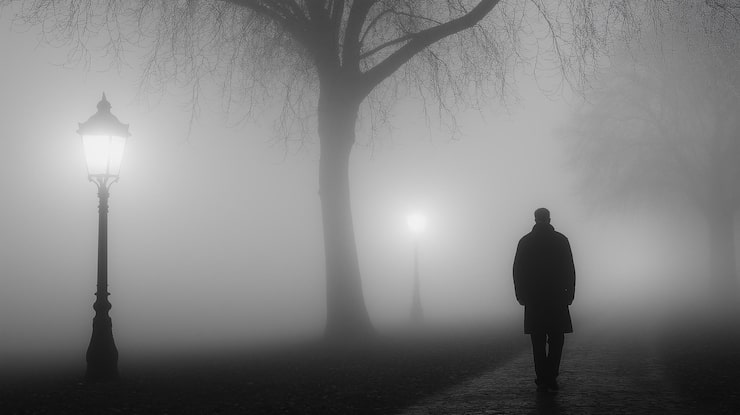
I am not much for romance, and neither were my parents, I don’t think. But I love this story, the youthful ardor of it, the handsome young man walking all that way, collar up against the snow, head down, hands in his pockets. My mother waiting for him looking out her front window, and wondering would he actually make that journey, and ooh, yes. Look. There he is, emerging like a developing photograph through the white and white and whiteness of snow, a dream, and even better, not a dream.


We are smack dab in the uncertainty zone for winter weather this year. We might have a mild, barely there winter, shirt sleeves in February, a happy jump on tomato season come April.


Or we might be buried under buckets of snow. I’m hoping for at least one surprise, that morning we wake up and without even opening the blinds we know something big happened overnight.


Or like that away game eighty years ago, something monumental, memorable, like the thing that caught my parents by surprise, caught thousands of people by surprise, but really, in their beautiful youth, it only happened to them, for them.
Snow Days Remembered

My grandmother would tie a woolen scarf  under her chin, and tie similar scarves under ours, and take us outside, into the knee-high snow, to play Fox and Geese. 

By my reckoning, she would have been fifty-eight years old, my brother and I not school-aged yet. She stamped out a large circle in the snow, then stamped radiating lines across the circle until she had created a wagon wheel with spokes. 

She was the Fox, and chased us around the perimeter of the circle, using the spokes to bring her closer to her prey.  We were the Geese.  It was an elaborate, frozen game of  tag she played as a child,  and for a time we, too, were children of the prairie, fluffy snow flakes flying, a small game on a winter’s afternoon, after chores, before a lamp-lit supper. 

We didn’t last long at the game, and of course we had no chores, and supper was whatever she had and fully illuminated by OMU.  But first we had snow cream, which froze our small brains, and we ate it because we had begged for it, not because it was all that good. 

Well, it is pretty good, the sugar never melting so that sandy sensation in the mouth, the race to get it down our gullets before it melted completely as we scooted the last little clumps of ice around our bowls with half-frozen spoons. 

On such afternoons my grandmother was most her Indian Territory self, practical and uncool, making us wear odd garments, socks for mittens, wonky sunglasses she found in the back of a drawer to protect our eyes from the snow’s glare.  I liked those sunglasses, and was embarrassed by them, and she didn’t seem to notice or care. 

Even then, especially then,  I was easily embarrassed. The get-ups, the old woman’s scarf tied around my brother’s chin.  But she was also more amenable to us playing in the snow than my mother.  Granny played with us out in it.  She gave us shovels and then quarters when we cleared her walk.  She laughed. No, she giggled as she chased us, a fine, frosty tinkling. 

Snow in my own backyard meant fun at first followed by bickering. Snowball fights that ended in tears, disagreements on the construction of the snowman, even when the the snow did not cooperate.  We never completely dressed one, never could agree on material for the eyes, never a carrot for the nose but a stick, and it didn’t matter anyway, because his head got knocked off right sharpish. 

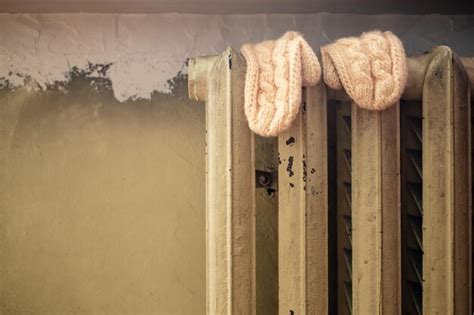
What stressed my mother most was all the piles of pajama bottoms and jeans stripped off and sopping on the family room floor.  Snow encrusted mittens and sock caps draped on every radiator, the way we were overheated and freezing at the same time and the monitoring of our running noses. 

She might make hot chocolate, but her heart wasn’t in it, and I think of her in those moments less like a McCall’s mom and more of a down and out waitress at a late night greasy spoon, slinging hot drinks for the drunks. 

All of this, though, wasn’t the real essence of snow days. A snow day was a protracted event.  Would it snow, how much, how deep, school or no school?  Conversations we held lying across someone’s bed, our chins propped on our fists as we stared out the window into a winter gloaming.  We didn’t have weeks to anticipate a snow storm, a few days at best.  We had Marcia Yockey, our tri-state character of a meteorologist, drawing on a board with thick black markers, her checkmarks backward, because she was left-handed. 

We were earnest in our discussions, cooperative, even, because it took a team to dissect the vicissitudes of Ohio Valley weather patterns.  That river, always the dividing line, a bridge span dictating snow or rain, wind or calm, something we understood before we could talk.

I should have been born in the frozen North. Or the prairie, perhaps, like my grandmother.  I thought this as a child. I Think it now. There are those who call me insensitive, here in my warm house, longing for snow.  I don’t have to work in it, get out in it, even.  That is true. But still, I love it, and like most things we love, I can’t do too much about it. I love it for its  powerful, beautiful and, sometimes, destructive nature. The thing I await, and for which I prepare.  My self small in comparison.  And in all of that, a specific kind of joy.