Category Archives: Uncategorized

A New Kind of Hindman

 All this week I will be attending the Appalachian Writers Workshop in Hindman, while sitting at my dining room table. I wouldn’t have planned to attend this year, except Sonja Livingston, an essayist and memoirist whose work I greatly admire, is on faculty and teaching in my genre, Creative Nonfiction.  

So, here I am. 

Or rather, here I sit, while she sits in her home in Western New York, and my classmates are sitting in theirs, or at the beach, or wherever they are spending this week in late summer.  There is no trudging up and down hills for meals and class, no  gatherings and in person evening readings.

There is no dinner bell that echoes around the mountainsides when it calls us to come eat or to attend a session in the May Stone building.  There is air conditioning here, in my house, a constant 72 degrees, except in the afternoon when I get hot and crank it up, or is it down, to 68.  Hindman is air conditioned, too, but it seems spottier, somehow, with all that walking and all the damp that hangs around windows and drips from the kudzu. 

Books are important at gatherings such as this, and we have a bookstore at our disposal.  The Red Spotted Newt, in Hazard, has a pop-up shop on campus, and we have the website to order all the books our virtual carts can hold.  The owner, Mandi Sheffel, is on campus for the few participants who are staying there, but she is sticking around for the rest of us, too, just like at a regular writers workshop, only we see her at a distance in a tiny Zoom window.  We can’t walk up and chat like we normally would.  But we also do not  thumb every book she has brought, picking them up, putting them down, flipping through them again, so maybe she is happy, at least, to have more pristine stock to offer customers.

It’s weird seeing old friends and complete strangers in their tiny Zoom rooms, these people who have bared themselves on the page, the ones we are to give feedback to, receive feedback from, the angst and the tenuous trust of that. But, somehow in Sonja’s hands, it works.  The group, too, does its part, jumping in and braving the process, and my only let down was this. 

At Hindman, after the first session  we walk back to the May Stone building for lunch.  This takes a while, as we meander alongside a wide meadow and then over the small foot bridge, and it is one of my favorite parts of the day.  Up ahead are little clutches of classmates, their heads together, still discussing the workshop we have just left.  Someone behind me has told a funny story and now I hear nothing but laughing, and I am sad I missed it.  

My pals and I walk slowly, reveling in another first day at the forks of Troublesome Creek, with a general sense of love and well-being and a mild wondering of what is for lunch.  The heat may be bothersome, but in a minute we will be snaking our way down the lunch line, searching for and finding old friends from other years,  with squeals and hugs and much shushing because someone we can’t see has just started grace. 

Hindman is different this year.  Was different last year, too, with serious discussions about if, and how, to carry on in light of the pandemic.  This year, there was no discussion of if to have it.  The work it seems to me, was directed toward how to have it well, and the week is off to a great start. 

It has been a few years since I have attended, but the draw of working with a writer I admire was too important to forego.  So here I am, new notebook, my good writing pens.  But I’ll miss some things, too.

I’ll miss the after hours conversations, the socializing, the landmarks that let me know I am almost there: Yoders, the Amish store on the outskirts of town where we buy bread and cookies, the Midee-Mart, on the edge of campus, the new concrete bridge over Troublesome that replaces the old one that created a deadman’s curve. 

And then the settlement school, nestled in the crook of the creek.  Whenever writers gather, there are words upon words upon words.   And they are the point, those words, and here we all are, together, sharing them.

How to Shop for Baby Now

There was a time when I went to baby showers content in the fact that I had shopped at the most exclusive emporium for baby goods.  I had been assured by the clerk who looked down her nose that my purchases were tasteful, useful and oh, so desirable for the new mother-to-be, and if they offered gift wrapping—which places like that always do — more the better. 

I then took myself off to the baby shower, relatively happy to play those silly games because for baby showers there is always cake in the shape of happy animals — rabbits or teddy bears, and I am a sucker for cake. 

Sometimes a slightly disheveled sister-in-law would bust in late, a giant package of disposal diapers under her arm.  The more spit-up she had on her shoulder, the bigger the package of diapers. 

I’d scoff a little to myself, reassured by the receipt in my purse, the one they put  in the little envelope, as if it, too, were a gift, because I couldn’t think of a more unimaginative present than diapers. 

A couple of weeks ago word reached me that my niece, Katie, was starting to panic, or at least getting a little anxious, as the birth of her first child loomed on a near horizon.  Her friends had thrown a virtual shower, with links to on-line wish lists, but still, there was so much she needed, or thought she needed, to feel prepared.  

And diapers were right up there with onesies.  There was something about having a shelf full of diapers in two different sizes the soothed and reassured her.  Ditto, onesies.  But that’s not all.

It has been twenty-five years since I have bought baby things, and it is nothing like I remember.  There are Boppys, round pillows for the baby to lounge on, and for something called “tummy time.”  When my mother thought the backs of our heads were getting funny-looking, she just flipped us over.  My sister turned her kids like pancakes because she wanted them to have ‘pretty-shaped heads,” the highest compliment our grandmother could give a child.

Then there are the bottle and pacifier boxes.  Katie’s sister, Hannah, and I went shopping last week and we looked for them because they were on the registry.  I had no idea what this was.  I worked out maybe they were sterilizing contraptions, which I understand for bottles, but not the pacifier.  If we spit one out in the dirt outside, my mother rinsed it off with the garden hose.  Inside, if water was in the other room, it got swiped across the leg of her pants. I saw the dog lick one clean once.

But no, the bottle and the  pacifier box are designed for the child to choose.  In each box is a collection of, let’s say, four different pacifiers, bottles.  The idea is to let the infant try them out and then somehow “select” the one they like best.

I fear these new parents may come to regret this early encouragement of choice, but what do I know?  Maybe a little more ease and comfort early on would have made us all a bit nicer, more tolerant of each other.  I know I act my ugliest when I am frustrated and powerless and not listened to, so perhaps there is something to it.

Katie is a practical sort, even so, and while she is enthralled with the idea of the baby choosing pacifiers and bottles, she is keeping it simple, too.  Her cousin, Alex, has helped in this department.  She has an eight month jump on Katie in the new mama department, and has been the go-to for what works well, what is a must-have, what is ridiculous, and what is the thing you need most at 2:30 in the morning when you have your first cry at the kitchen table. 

Katie wants socks the baby won’t kick off.  Alex says there are no such things. 

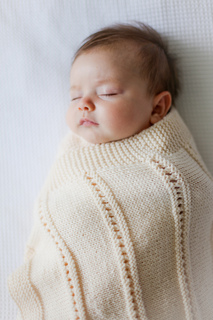
Katie thinks four swaddles are enough.  Alex, and every other mother out there, says no.

Katie just wants this baby born.  Alex, who went long, says, I hear ya. 

Katie and Troy are waiting.  It shouldn’t be much longer.  And of course,  it isn’t about any of this, diapers, swaddles, Boppys.   It is about this new little life and how it will ripple and ripple through our hearts, forever.  Onesies we can buy any time, and all day long.

Doing Battle with the Beetle

My good summer help is off the clock for a week or so.  She has church camp in Michigan and then some family time in Chicago, and my yard is beginning to miss her.  We set aside a few chores for her return, but now I think I may have to get after them myself.  My casual, happy little landscape theme is beginning to look like neglect, the kind your neighbors can call city hall about. 

Even so, when she returns there will be plenty for her to do. Because now is the time when, in all my summers,  I am bored with everything:  potted plants, the pepper plants, even most the herbs, save rosemary and basil. 

We were spared the cicadas, here,  and I will cop to being disappointed about that a little, but we are infested with Japanese beetles.  They have eaten the leaves on my young crepe myrtle, my calla lily—the leaves and flowers—and are making their way toward the basil.  

This I will not stand. 

Early this morning I inspected the crepe myrtle, the one I nurture all year because it replaces one I lost to an ice storm and is therefore precious to me.  I wish you could have seen it.  The sun barely up and it was an Amsterdam youth hostel up there on the leaves. Beetles everywhere, some cozied up to each other, you know, and something inside me snapped. 

I try to be gentle with, or at least tolerant of, the living creatures in my yard, but not this day.  I plucked off as many as I could before the activity alerted their little buddies and they took flight.  Then I gave the ones I caught a little spa treatment in a bowl of soapy water, and what happened next, well, it is between them, me, and my God.

Sitting here, telling you this, has me thinking about the balance of things, and I just looked up what kinds of critters rely on the Japanese beetle to survive.  It seems birds like them, in particular robins and cardinals, both regular visitors at my house.  I see them everyday.  Either they are lazy, there are just too many beetles to get at, or their palates are more refined than usual, because, again, beetles everywhere and procreating in my myrtle. 

Raccoons, skunks and moles like them, too, but these come with their own sets of troubles and I would not like to invite them into my habitat.  According to one source, Japanese beetles bring almost nothing to the party, except destruction.  We all know that guest.  And to make matters worse, the beetles weren’t even around here until 1916, when they were accidentally introduced in the New Jersey area. 

There are some plants that will deter them, mint being one, but I am not kidding, they have gotten into my grandmother’s mint, as well. But no, on closer inspection just now, I see the leaves of a weed nestled in with the mint is nothing but skeleton, the mint itself, unscathed. And lavender repels them.  Which is good news, because I have some of that I need to relocate. 

When Sterling returns from her travels, she and I will bolster the defenses against the Japanese beetles.  Strength and victory through deterrent.  Move that lavender into strategic positions, ditto little pots of Grandmother’s mint.  I much prefer this to early morning raids with bowls of soapy water.  But still.  I have Dawn.  And I am not afraid to use it. 

When Did I lose My Pioneer Spirit?

My people didn’t stay put.  They came from Ireland to Oklahoma sometime in the mid-1800s,  a famine and poor prospects driving them to docks, and then onto rolling and crowded ships, to heave up in some port on the eastern seaboard.

Some went  south to Florida, but the boys, the boys who wanted to be cowboys, pitched up in Cincinnati for a while to shore up their resources before moving on to Indian Territory in the West. 

When my grandfather was fifteen, his parents decided they should move again, this time to New Mexico.  I don’t know the reason, perhaps Oklahoma didn’t fulfill their dreams as they had hoped.  Maybe they were simply restless. Perhaps the grass was just greener somewhere else.  I am guessing they had never actually seen New Mexico to understand that not only was the grass not green, it wasn’t even there. They did not hit the big lick in New Mexico, either. 

My family, it seems, runs from bad dirt, broken dreams, or toward pretty promises, the ones they tell themselves and gussy up with all the fantasy they can muster. 

But my grandfather didn’t want to go.  He rented a horse and wagon and hauled pipe and lunch and supplies from town to the new oil fields being developed, so he could support himself.  I have no idea where he slept. He refused to go with the family and made it on his own—fifteen, remember—his own individuality on display, a study of self-sufficiency and get up and go.  

Only he stayed. 

The owners of the oil company were impressed by this young man making his way, and soon he was working for them, taking time out for the Great War, an experience I understand he never discussed.  My grandfather left Oklahoma in the early 1920s to open up the oil fields in western Kentucky, and his branch of the McDonoughs have more or less stayed put ever since. 

I think of these things as I sit in bumper to bumper traffic on I-65, vowing to never leave home again, at least not in summer and certainly not to go to a sweltering and crowded beach town.  I am a calm and cautious driver so I don’t gasp and make comment every time someone in front of me does something stupid—I expect it and prepare for it in advance.

But still, the traffic.  It was bad. I was tense with attention.

I became mesmerized by the spinning wheels on the tiny pink bike clamped to the back of the car in front of me. I see lots of cars with bikes leaving the beach, but something about this one, so small, so bright, streamers flying away from the handlebars, just  tickled me no end.  A banana seat, white pedals, it was the picture of hopes and dreams and promise, and I tried to imagine the little one who maybe mastered that sweet ride on this particular trip.  

This little fantasy took a good five minutes, and I was glad for it.  

But the rest of the trip was torturous.  Stop and go traffic, forty miles an hour if I was lucky. By Columbia, Tennessee my head was rolling around like a melon on a pike and I truly thought I might die. 

I came off the road, then, not knowing or caring I was less than three hours from home. Food didn’t perk me up and before the check arrived I had procured the last hotel room in the Hampton Inn down the street.  

Now, here is the question.  How have I let my family down, those roamers, settlers, dreamers?  Would they even claim me?  I struggled driving, both coming and going to Florida,  with all that mass of humanity off in search of fun—through the remnants of a tropical storm going down, frightening and difficult traffic coming home.

And soft, I am so soft compared to them.  My air-conditioned car, with cooling seats, no less.  A playlist of my best open road music, expensive protein bars and electrolyte water on the seat beside me, as if I am running a mini-marathon.  

And still I can’t take it. 

I know when to claim defeat.  

If you are traveling south, as I know some of you are, be prepared.  It’s like the Oregon Trail out there, prairie schooners packed and tilting, everything lashed down and covered in tarps. Me, I’m not moving ’til fall. 

Sun, Rain and the Stormy Gulf

I write this from a beautiful place.  A place known for sugar white beaches, sun,  and sea turtles lumbering around burying their eggs.  I write this from the crow’s nest of the place I am staying, digs generously offered by friends who are down here, too, and find themselves with too much room. 

I write this dry, though a driving rain beats just outside the windows. 

It is early morning, even though I was up at midnight on the covered porch as lightening blazed and thunder rumbled, sometimes in the distance, sometimes clapping overhead.  It is a big rain.  A long rain with no signs of easing up today or tomorrow. 

A biblical rain. 

And I like it. 

But one of the reasons I am high up in the house is this.  One of my hosts is here for the golf, and just yesterday, also a day of rain, was to be his first day on the links.   Or should I say link, since he got in only one hole before the skies opened up.  He’s a bit cranky and working through it. 

I feel bad for him.  

Golf, requiring finesse as it does, has never been my sport.  I’m of an age now where I no longer plan a beach vacation around the hours and intensity of the sun, cabbaging onto a lounge chair at nine in the morning so I can have it still at high noon, the best and most efficient hour to toast oneself a gorgeous brown, the same activity that will land one in a dermatologist’s office forty years hence. 

My travel prep last week included coffee time with friends, laundry, procuring a house sitter and a plant waterer, and the purchases of high tech beach towels and a crushable sun hat.  Cheap t-shirts.  Sunscreen. 

In all my preparations I failed to watch the weather.  Didn’t notice the tropical depression working so hard out there in the Gulf to get a name.  So, it was a surprise when Claudette greeted me early Saturday morning as I drove with thousands of others heading south.  

A little past Montgomery I had just about had it and I tried to ditch her, or at least minimize her particular way of annoying me.  I left the bumper to bumper traffic and low visibility of I-65 for an Alabama backroad, I don’t know which one.  But I figured, as long as I keep heading south, the ocean will eventually break my fall and from there I just have to turn left or right.

Which is what I did. 

Instead of packing golf clubs, I pack knitting needles.  Binoculars.  Books.  Notebooks to fill with inspired and inspiring thoughts.  I save so much money because I bring them home empty and just toss them in my pack for the next time.  I pretend I actually live here, in this beautiful place with the manicured lawns and wild weather.  

I see myself pensive and tragic.

I see myself famous and jaded and hiding away from the world. 

I see myself in a muumuu.

But this is just me. It is early in the week and it is apt to rain every day.  I don’t know what my golfer pal will do.  His wife and I have other friends down here with us, and they are fun and busy, working jigsaws, getting mani-pedis when they can’t hang by the pool.  I, myself, could go for a spa day, if I wasn’t too lazy to make a call.  

So, I sit in the crow’s nest, giving my hosts some space to sort out their week in a way that won’t be too distressful.  There is good shopping, a movie theatre open, but still, I’m not on that committee and they will have to work it out for themselves.

Or maybe the gods will smile on us, and in particular Burnt Pine.  The course will dry out and the sun will shine on the greens.  I can loll by the pool or on the beach and try out that sand-proof towel.  Wear my new hat.  I hope so.  My friend  needs to golf and truly I have a head for hats. 

Babies, Blankies and Great-Aunties

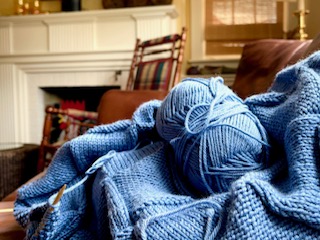
I spent Sunday afternoon with my knits and purls and wooden needles softly shuffling against each other as I worked on a baby blanket.  Being in the midst of a summer cold, the cruelest of maladies, I was content to sit and sip tea and think about this baby for whom the blanket is intended. 

He is already here, Master Arthur Henry, and I only just met him a couple of weeks ago, this happy little fellow who smiles and gurgles and rolls over like a champ. 

He rolls with such gusto he often ends up under things, like my rocker, and he can’t get out, and I swear, I think for him that is half the fun.

He doesn’t live all that far away, but as for so many of us, visits with new babies have been a different kind of thing. His mother and grandmother are good about posting pictures, so it seems like I almost know him.  But really, those expressions caught in mid-air, the flatness of a photo, are inadequate substitutes for real-time giggles and smiles and drool. 

He is easy to hold and likes it, nestling in and burrowing his head just under my chin, only to pop it up a short second later.  He’s a good sleeper, I hear, once he gets there, but he fights it, afraid he might miss something. 

His mother and I had conversations about yarn color for the blanket.  She and her husband like a cool and muted palette, and I think maybe “oatmeal” was mentioned as fitting into the nursery scheme. 

I aim to please, and had gathered up a very soft, very bland wad of ecru yarn, had almost paid for it, when I just had to go back for one more look.  I couldn’t imagine spending hours working with it, it was that boring, and I think a blue-eyed, ginger-headed baby needs something as bright as he is to wallow around and wrap up in. 

I found a nice blue, not garish or cliché, and muted enough to work in the nursery, warm enough to be inviting.  

So, on Sunday, unwell and feeling sorry for myself, I spend a couple of quiet hours knitting and listening to the afternoon rise and fall just beyond my windows.  I’m glad I have met Arthur now, as I finish his blanket. When I knit something for loved ones, I like thinking about them as I work.  Not exactly as one might while knitting a prayer shawl, but kind of.  

If I am working on something for a baby or a child, I don’t watch Netflix or listen to podcasts, at least not my usual fare.  I might watch a cozy British mystery, but never anything gruesome or troubling, or laden with language.  It is as if the recipient of the blanket is in the room with me, and I have to monitor my surroundings. 

This isn’t even conscious, and I only realized it while working on Arthur’s blanket. I just couldn’t find something to watch that seemed in keeping with knitting for a baby on a Sunday afternoon. 

So, I sat in the quiet and knitted and purled, counted rows. I thought about him as I worked, but nothing so specific as hopes and dreams and speculations for his future. Of course I want him to be well-loved and happy, kindly treated and nurtured in every way. But those big, specific things, those are the wishes for parents, for their quiet moments of dreaming, 

I have a different job. 

I am the auntie, the great-auntie, as it happens.  My job is easy.  I just have to be here.  Sitting with a half-finished blanket in my lap, the stand-in for the little person who will fill my lap the next time he visits.  Waiting to get to know him better, what juice boxes to have on hand, what cookies we won’t tell his mother about. Discussing what is on his mind, his worries and his favorite jokes, or discussing any old thing at all. 

All on earth I have to do is love this child.  And to love his new cousins coming along in quick succession.  Knit them blankets.  Make sure they know where I am, any time, day or night, anywhere in the world. 

HUGS, BRUNCH, AND OTHER THINGS

We met up in Lexington, first for lunch and then an afternoon of catching up that dribbled over into the evening, and ended with most of us staying over, scattered over two stories of our friends’ new house.  This is the group I see three or four times a year, often more if someone is reading or giving a presentation or just happens to be in the area. If we can, we flock to the place wherever the others are, even if for an afternoon, or  a quick lunch just off  I-64, I-75, the Bluegrass or Mountain Parkway.  

An entire year and then some has gone without us clapping eyes on each other.  A year with illness and deaths in the family, new homes and weddings and retirements to celebrate and there we all were, stuck in our homes, Zoom a sorry substitute for our old lives, but we were grateful for it, even so. 

And then, on a perfect Saturday in mid-May, we met up at Dudley’s in Lexington, just as the farmer’s market was in full swing outside the open doors. Everyone out in shorts and t-shirts and their fancy little dogs, or their sweet rescues with fancy leashes, or babies in fancy strollers, and it was almost an assault to the senses all those people and all that color concentrated in one small space. We aren’t used to it anymore.

We arrived early and were shown to our table where we waited for the others to join us.   It was graduation day at UK and the restaurant seemed full, although tables were still fairly spread out.  Maybe it was the celebratory feeling chasing around the room that made it seem full to overflowing. There was more than graduation to celebrate this Saturday, as mandates eased and the world cautiously opened up.

When the last of our group arrived it was hugs all around.  We had been talking about those hugs for weeks, and they were worth waiting for.  No shoulder bump/air kiss embraces these.  These were full-on funeral hugs, homecoming hugs, the greeting and parting hugs of every wonderful Christmas gathering all rolled into one.  We rose from our seats and stood in the middle of the restaurant, in other people’s way, announcing who was coming after whom for their long overdue embrace. 

We luxuriated in those hugs.  And then we ordered drinks. 

There is something about the brunchy time of day that just screams for some kind of pretty drink.  Even if you don’t drink, you kinda want one, and one of our pals who rarely imbibes, if ever, decided she wanted one, too.  We spent a long time discussing what she might like, talking in that indulgent way one does with a child.  Do you think you want something fruity? Fizzy?  Orange?  Peach? 

We ordered for her, making sure it was something we all would like, knowing we would probably be polishing it off for her, which we did. We shared that drink like we share desserts.  We passed it back and forth, smacked our lips and struck poses, attempting to discern the elusive flavors and ingredients like the experts we think we are. 

In the afternoon we met up with the rest of us who didn’t make it to lunch.  We sat outside as the shadows lengthened, talked for hours about what, I can’t say.  I just know the conversation never dragged, we took turns speaking like well-behaved kindergarteners, we brought each other water and soft drinks, crackers and cheese after any trip inside. 

At some point we talked about books we were reading, things we were writing, what other friends were up to.  There was a huge yard to explore, a creek, a hammock-y kind of swing no one could get in or out of gracefully. We laughed at everyone who tried it.   Finally, pizza. 

In other words, a normal, lovely day.  A day that in the depths of our isolation, we thought might never come. And yet, here we are. We have a holiday weekend just ahead, one of the little holidays, which is perfect for testing the waters, with no big expectations but some family or friends around, some potato salad and barbecue, maybe.  Which is great, really, because a simple backyard gathering leaves so much more time and space for all those hugs.

Masks No More

I took my first small steps toward living life as a vaccinated person last week, planning a quick trip to Cincinnati with my friend, Donna.  We had a small window to travel since necessary events like doctor’s appointments and graduations have hopped back on our calendars. 

But we dared to take our vaccinated selves a little bit north, to visit the aquarium in Newport, check out a museum or two in Cincinnati,  and shop at Jungle Jim’s. 

We figured we would see the aquarium first, since it was just this side of the river before crossing over into Ohio.   We spent the afternoon wandering around, oohing at the pretty fishes, ahhing at the colorful ones, and eeking at the truly horrifying, Moray eels getting most of those. 

 The museum was death on masks, with teenaged staff on patrol, checking faces, peeking around pillars to make sure the four-year olds in front of me had their little noses covered.  

I was chastised once and I didn’t take it all that well. 

Because I was hot and sweaty and couldn’t breathe. 

Barely into the first room of tanks I began to question my choices of the past year.  How did I let myself get so out of shape? I struggled to breathe, could feel my heart pounding in a disturbing way, and I wanted to sit down.  As soon as I ripped off my mask once outside, I could breathe and I felt instantly better. I’m so suggestible, I thought. 

The next day and the same thing, but this time in the Cincinnati Art Museum.  Hot.  Sweaty.  Cranky. Faint. Miserable after two hours and here I was hardly moving at all, just sauntering,  when I wasn’t floating, from one painting to another.  And again, instant relief in the fresh air. 

What was happening here? 

What was happening was this.  My mask wearing up to this point had been brief.  The grocery.  Doctor’s appointments, where, somehow masks seem less burdensome.  I thought this little getaway would be a good test for living a little larger life, masked though I may be. 

So, last Thursday afternoon I parted ways with Donna, off to take a nap, feeling sad and disappointed. If Michelangelo himself came back to give a lecture on the trials and tribulations of painting the Sistine Chapel, if he asked me to sit in the front row so he might turn to me for encouragement, being scared of public speaking as he is, I would have to turn him down. 

Because I can’t wear a mask that long.

Then, in the course of an afternoon nap, my world changed. 

New guidelines were announced while I slept and the vaccinated can ditch the mask.

Two hours later and we can’t find a place to eat.  Every hip restaurant is packed, waiting lists piling up, the front of house staff shaking their heads, unable to explain why they are so slammed, so suddenly, on a weeknight.  

I can explain it. 

That there, that was freedom in the air.  

Release and relief. 

Freedom for those who wear one mask and another one, and a third on top of those. 

Freedom for the reluctantly compliant, of which I number myself.  I will do what I am asked, even while my head is reeling with conflicting data, mandates contrary to commonsense, and a nagging fear, larger at times, smaller at others, about getting sick and what that might mean.  

Freedom, too, for those who hate to be told what to do.  They don’t have to fight about it anymore. 

The announcement came so quickly, and was so general, it will take a while for states and businesses to catch up.  But each day now corporate masking orders are dropping like flies and it is fun to watch.

Some will keep wearing masks, I suppose, and that is fine, as long as they don’t cut those shaming eyes my way.  Or anyone’s way, really.  Because for now, the worst is behind us and we can make decisions for ourselves and our own safety.  I’ll hang on to that package of disposable masks for the occasional times I might need them.  But I plan to walk bare-faced into the sunlight, and into Target, the first chance I get. 

Right now, the biggest task before us is finding something other than Covid to talk about.

Won’t that be something?  No more Fauci, CDC, WHO, all of them having worn out their welcome in my conversation rota long ago. On to better, which is to say, normal, things.

Early May Gardening

I post a photo a day on social media, have done it for over a year now. Every day, at least one photo.  Lately, because I am lazy and also because I love the newness of this season, I post images of the flowers I am planting, the pepper plants and herbs.  I never have to leave the yard, and there is the added bonus of a photographic record of my early intentions as I welcome summer. 

But it isn’t summer yet, and the spring flowers, my favorite, are still making their appearance. Some home repair last summer threatened my Annabelle hydrangea, so I separated it into three plants, which I now call Sad, Sadder, and Saddest.  But maybe after a good settling in they will survive and even thrive in their new little plots of land.

The peony has bloomed and it looked lonely.  It needs company but it is such a lovely peony I hesitate to give it any because I am convinced no other peony will compare and a less than gorgeous plant will bring down the neighborhood, knock some of the shine off this one, out there, doing its beautiful thing. 

The porch and patio table still heave with flat boxes of things I need to get into the ground.  The packets of zinnia seeds sit on the mantel by the side door in a vain attempt to remind me to scatter them in the beds that have been prepared for weeks. 

But what I don’t have, what I long for more than anything, are my grandmother’s bearded iris.  There was an ancient bed of them along the side of her house, a part of the yard we were seldom in.  There was a cherry tree near by, perfectly scaled for children to climb, and I imagine that figured into our lack of unsupervised time there.  

But no matter, her elderly neighbor, Annie Starks, had iris, too, on the other side of my grandmother’s yard, and they stood in dense and uneven rows in the cool early mornings, dripping with dew and heavy with scent, a scent I will always think of as purple. I used to sit among them, feeling the cool dry dirt that anchored them, the morning damp on my bare legs.  

But surely this isn’t right.  Perhaps I just wanted to nestle down with them, to search for the little faces of yellow that played hide and seek deep in their throats, to drink in the coolness, the rich earth, the good place for hiding and being alone.  

The iris of my heart is purple, deep purple, I think, but maybe not.  I can’t remember now the exact color and no photos exist that might tell me. They may have been lighter, lilac perhaps, and I have searched for them in garden centers and other people’s yards, and I am surprised by the amount of time I dither over this. But it seems important, that color.

For my friend, Silas, the color is yellow. He has moved several times since his aunt, Sis, died, and always she moves with him in the irises he dug from her yard, the ones he transplants and tends and tears up over each spring.  She is miles and years away from him now, but never closer than when her yellow iris bloom, filling a vase with bursts of bright and elegant color, filling the house with the particular scent, swelling his heart for this aunt who was more than an aunt to him. 

I post photos of peonies and people post photos of their peonies back.  Or share stories of their grandmother’s peonies, how they wish they had them still, long swaths of them lining the driveway of a house no longer standing. I post close-ups of sage and Greek oregano, again, out of laziness, but also because the leaves are delicately edged and intricate in a way we never notice when we harvest them in a hurry, something simmering on the stove requiring their attendance. 

There will come a time when the weather will turn hot, which is hard on me, but not as hard as the humidity that will come with it. I give my plants and flowers as good a beginning as I can, knowing that neglect is coming.  In the sweltering, asthma-inducing height of summer, my approach to gardening is Darwinian. 

But for now, for a little while longer, let the tenderness continue. 

Bicycles, Lost and Found

My bicycle, my beautiful English bike, was stolen a few years ago, lifted from my garage in the night, just as summer was arriving.  The policeman who took the report explained it.  It was the time of year when bikes went missing, kids or professional thieves casing neighborhoods, striking while we slept. 

I blame myself, in part, for the loss.   I had workmen in to shore up the listing walls of the garage, and I gave a fleeting thought to moving my bicycle inside, away from falling objects and the eyes of people I don’t know.   And the back gate by the alley didn’t latch properly at the time and some mornings I would wake to its wide-mouthed gaping, blown open in the night.  These may have been factors. 

But mostly, I felt wretched about the loss and mean-hearted toward humanity, whichever particular members were involved in nicking my bike.  It was distinctive and easy to spot and I never saw it again, although I prowled the streets and stopped by the police station once a week. 

I decided I didn’t deserve nice things.

I had fallen in love with the British “sit up and beg” bicycles while staying in Oxford, but who doesn’t fall in love with bikes there?  They are everywhere, chained to gates with signs saying  DO NOT LOCK BIKES ON GATE, they sit shoulder to shoulder in bike racks throughout the city, in front of every college, library and quad.  At the train station a sea of bicycles, shiny bikes, rusty ones, leather saddles here, saddles wrapped in plastic Tesco bags there. 

I wanted one. 

A shiny black one. 

An old-fashioned one.

So, I bought one. 

But I bought it in the States and at the time there was only one place to get such a thing and only in one size.   If I am honest, it never fit me quite right.  It was too big, but I convinced myself it was perfect.

Now, I think I want another bicycle.  But I don’t know. 

If my own friends are any indication, the statistics aren’t good.  Most of my pals who ride have had accidents.  And this is the worst part, the part that depresses me.  Most of the falls have occurred as they were getting on or off.  

Basically, standing still, which seems too cruel to contemplate.

Even so, I see myself plunking along quiet side streets or cruising the greenbelt, maybe, helmeted and slow moving, taking the air.  Never mind that my balance isn’t quite what it once was, that my reaction time now is leisurely and vague.  I am searching the English and Dutch websites for big, beautiful bicycles that weigh a ton but just roll, and roll, and roll. 

But then.  

Then. 

In my garage, leaning against the ladder and rakes, is my old Schwinn Suburban, the bike I’ve had since college.  I held it upright, and even accounting for the deflated tires, it fit.  The way the seat hit me just so at the hip, the perfect height for momentum and stability. Holding the handlebars I could feel, even now, the curve of every turn, the arc of the front wheel lifting as I jumped a break in pavement or took a curb. The geometry of this bicycle the mirror image of my own geometry.

In her memoir, “Ghostbread,” author Sonja Livingston describes her sister, Steph, as kind and strong, and the reader experiences her this way, too.  Heroic, even.  But what I love best about her, Steph, is the way she commandeered the cobwebby basement, spruced it up in order to set up shop building bicycles from old and broken parts she and a neighbor kid scavenged.  Rusted and bent pieces found in empty lots and alleys, perhaps, and then—how on earth — they crafted rideable, like-new shiny bikes.

I’m thinking of Steph as I balance my old bike against my hip, inspecting the rims and wondering  how long have they have sat there, flattening on the concrete floor. Could I restore her to something serviceable?  What would it take besides new tires, a better seat and replacing the ossified gear shifts?  Surely, this wouldn’t be beyond me.  

What I can’t fix myself,  I can hire out.  Which, even as I channel Stephanie, I know is likely to be most of it.  I even like the way the paint is worn and dull, scratched up, a place rubbed raw on the front fender where the basket used to sit. This good old girl, left too long and unloved in the dark.