Of Dark and Light


I was sneaking around last week, trimming some branches overhanging a sidewalk, branches of the evergreen variety, which I planned to take home and drape artistically across my mantel.

That I was driving around with my pruners on the front seat of the car is, frankly, no one’s business.  That it was dark, just after dusk, is a happy coincidence that, even so, hindered me in performing this civic service to the walking public.

Perhaps my eyes have not adjusted yet to early nightfall, my rods and cones still scanning the environment for the crisp light of autumn.  Or, maybe it is coming for me, that old age thing that descends like velvet across a window as I approach the time I can no longer see at night, at least not well enough to drive.

For I was having trouble.  I ran a few errands along streets I have known all my life, but in the gathering darkness I felt a bit off-kilter.  The shadows sooty black, headlights too bright, neon signs along Frederica strobing and blinking and making me a little sick.

Or, maybe my rods and cones haven’t seen total darkness in years, if ever, and they were just searching for the best possible reading, not unlike a camera searching, searching, in and out, for the proper exposure in difficult light.

My head felt a little like that, buzzing and catching, and I came home and had to sit down for a minute.

Even at night, in our beds, we do not drift off in complete darkness. We are instructed to turn off our TV’s, leave our phones in other rooms, keep the blinking and beeping of computers and gadgets to a minimum in our sleeping chambers.  There are eye shades and blackout curtains if all else fails. 

There are those who chase the light—pilgrims from overcast countries who dream of the sunny seaside, or t adventurers in parkas who travel far into the frozen tundra to glimpse, if conditions are right, the aurora borealis.

And then there are those who seek the dark. Total dark, without street lamps, the glare on the horizon of a city afire with neon and halogen.  A place so dark the stars come out—all of them—and the moon illuminates the landscape, at once familiar and foreign, lit, as it is, from the sun, once removed.

Total darkness exists, but it is harder to find.  It can’t be found on the continent of Europe, or in the eastern half of the United States.  But cross over into the prairie and into the plains,  and you can find it. The northern tier states have it, and in the mountain ranges of the West.  Parts of Maine, too.  Almost anywhere in Greenland, Mongolia, the western reaches of China.  Most of Kazakstan, the great midsection of Africa, the Australian outback.

On the eve of the longest night of the year, I think of the great darkness and the way it captured the imaginations of human beings, back when real darkness meant something.  I would have burned a yule log, too, would have kept vigil, done all sorts of things to ensure the returning of the light, this light made more precious for the long hours without it.

I would like to see the world, as it once was, as it rarely is now, pitched in utter darkness. 

Would the wind blow differently, would sound carry in odd ways, would I feel a change, a shift, would I still know who I am, what to do, with nothing but the light of the stars to fix my place? 

Would my eyes adjust?

The winter solstice arrives and we build fires, light candles, fill our homes with tinsel and glitter and shiny things. We do this for Christmas, for Hanukkah, for comfort and reassurance.  We gather our loved ones close, for they light our way, too.  We sing, boisterous or sweet, with abandon, or reverence, or joy.

We take a bit more time in our greetings, are pleased by chance meetings with old acquaintances in shops and on the street, happy in the encounter.  This, too, is a kind of light.  A reminder of who was once important to us, and who is important still.

We hunker down in December. Count our blessings like gaily wrapped gifts.  Watch for star shine in our loved ones’ faces.  Thank the dark for helping us see it, just there. And there. And there.

PAR AVION

A month or so back, I received a long blue envelope in the mail, and inside was an irregular-shaped post card sent to me from my friend, Beth, who is living in Bordeaux with her husband, Kris.

The postcard was lovely, and contained greetings from Beth and Jason, our pal who was visiting her for a few days.  They met up in Paris and sent the card, of what, I can’t say just now, perhaps a panorama view  of the Seine—something outsized and requiring special wrapping for its overseas journey.

What I was most taken with was the envelope. Baby blue and impossibly thin, I hadn’t seen such a thing in years. Hadn’t seen it since the Seventies, probably, when I wrote my brother in the Navy when he was posted abroad.  In those days envelopes had to be stamped “AIR MAIL” if it had any hope of arriving in a timely manner. Mail, so marked, was bundled and loaded onto cargo planes bound for Europe, or Japan, other  exotic locales.

The rest of it got dumped into the hold of some slow boat to China, or Athens, or Hamburg, and arrived, oh, really, who can say? A lot can happen to a canvas bag heaved onto docks and flopping around the damp of a cargo hold, and who knows how much of it gets where it is going.

All mail is air mail now, of course, or mostly all of it.  But back then, air mail was expensive and postage was assessed by weight, and thus, the thin blue stationery.

I would drive my grandmother to the post office and we would pick pads of note paper and envelopes, the same blue color, onion-skin thin, so we could write my brother. The post office sold pre-stamped sheets of air mail stationery—and we filled up the blank backside of the paper,  and then spent a minute or so performing arts and crafts as we folded along dotted lines and made flaps from the odd triangular wings until we had a self-contained letter and envelope, all in one.

The business side of the envelope was pre-stamped with proper postage, and the words  “par avion”  and “air mail” jumped off the page. I mean, really, does it get any more cosmopolitan than that?

Beth has been in Bordeaux for almost a year now, and she and I chat on occasion through Facebook.  We make plans to Skype or FaceTime  but somehow that never quite happens. I think, well, I will write her a long newsy letter, but that never happens, either. 

But something about that thin blue envelope made my hands itch, made me tear off her return address in France—a physical address—and save it. Something in the familiar feel of it sent me to the office supply store and the post office in search of air mail letters.  

No one seemed to know what I was asking for,  although the older clerk at the post office remembered  that  “foldy paper” people used to buy.  I returned home discouraged and rummaged through my stationery drawer looking for any old thing.  

Still, the idea of writing Beth in France on short fat note paper left me completely and utterly cold.

It lacks cache.

I eventually had luck on-line, and found  air mail envelopes, the colorful ones with the red, white and blue checked borders, sporting a round crest with “air mail” in three languages.  The ultra-thin paper is on its way, but it must be in some back corner of a warehouse somewhere, because it has been a couple of weeks and still no sign.

I think Beth needs real mail.  I think I need to write her real letters.  I think those letters need to look like something.  Something to remind me that this piece of paper is traveling a great distance, and it is of some import, even if it is full of nothing more than the gossipy goings-on of our friends.

I will write small, and neatly, like I did on those winged pieces of paper long ago.  I will admire  the blue ink on the blue paper, and think it pretty, those shades of blue. I will take my time to write, then post the delicate envelopes, making a special trip.  I will go inside.

It doesn’t matter what Beth does with my letters once she gets them.  It only matters that she gets them, from me, and that they go par avion.

Thanksgiving, now

A year ago I sat in my quiet house, admired the clean and uncluttered surfaces of my kitchen and pouted a little, even so, because I wasn’t in charge of Thanksgiving, wasn’t roasting the bird, wasn’t making the dressing or the elaborate and time-consuming cranberry salad.

For the first time since college I was spending Thanksgiving off, traveling to Louisville to be a guest of my niece and her fella, spending a couple of days with them, my brother and sister-in-law, my nephew, Dillion, and the dog.

Alex was solicitous when she showed me to my room that Wednesday.  Did I have enough covers?  Was the lamp bright enough to read by?  And, look.  Dan ran out and got a nightlight for the hall, the steps being steep and the light switch hard to find.

After morning coffee there wasn’t much for me to do.  She settled me into the sofa and turned on Netflix to a show she thought I might  enjoy.  It was a little like being a toddler. 

The day went without a hitch.  The food was great, Dan’s family delightful, and really, except for the dog dragging the turkey carcass into the living room after dessert, all  was perfect.

I had to admit, it was nice being a guest, getting fussed over a little, and contributing next to nothing but doing the dishes.  And even that was less about being helpful than it was about avoiding  the traditional Thanksgiving hike Dan’s family seemed so enamored of.

I was invited to return to Louisville this year but I will stay put, back in the business of roasting the bird and doing the dressing.  I’ll celebrate with my sister and her family, a smaller gathering than in years past, but one I am pleased about, one I am looking forward to.

It has been a year of change and adjustment, a year of fits and starts, with connections and separations that come to all families as children grow up, parents and grandparents leave you, and work and life rub blisters here, create opportunities there.  Everything in flux, up in the air, eventually falling back to earth in configurations you don’t always recognize or understand.

But this is nothing new. Life moves.  And we move with it.   It expands and contracts and veers off to the left, and here we go, eyes wide open or squeezed shut, but at least one hand still wrapped around the reins.  The stirrups may be flapping wildly, our hats have come off, but we don’t let go.

I’ve sent Alex the family dressing and egg nog recipes as she has asked.  But I called her, too, because I need to explain things, make sure I tell her what Granny Opal told me when she guided my hands all those Thanksgivings ago.  There is the recipe and there is the process. This is what I tell myself Alex needs to know.

How  fine to chop the onions, how many eggs to loaves of stale bread.  Time and temperature. The production that is making egg nog, whisking whites, long enough but not too long, how to judge when to stop. She can look all of this up, of course, can find better recipes on-line, perhaps, find more sophisticated ways of doing things.  But that is to miss the point.

What I mean is this. I want to instruct her as I was instructed, standing in my grandmother’s kitchen.   I want Alex to be there, too. I want her to have more than just a spattered index card.  I want her dressing in Louisville to join in concentric circles my dressing in Owensboro, and Granny Opal’s from 1948.  I want her Thanksgiving table to join with ours, and the tables of our grandmothers, and their mothers’ tables, ones laid in distant dining rooms we would not recognize, but belonging to us, all the same.

Black and White

I grew up in a photographic home. I spent a great deal of my childhood in one of two states—either antsy while standing stock still and waiting for the shutter to click, or hopping from one foot to the other while banging on the bathroom door, waiting for my dad to let me in because he was locked in there printing pictures.  He would let me in, eventually, but he was always a little huffy about it, and he was impatient, standing  there in the rosy red light and bathed in the fumes of developer and fixer.

When I got older he wanted to show me how to develop my own photos but the chemicals smelled bad and the production of mixing them, dragging the enlarger and trays and squeegees up from the basement, was overwhelming.

It seemed to be a male pursuit, all the beakers and glass stirrers and thermometers, the black changing bag he used to spool up his film before he developed the negatives.  All of it a production and exhausting and the drama of monitoring the faintest of stray light,  the yelling to keep the door closed  frayed my nerves, eroded my confidence and sent me to an early bed.

Sometimes I would stay with him and watch the images emerge, but I remember mostly the sensory aspects of it. The familiar bathroom made alien in the red glow of the special light bulb he used, the snap of the enlarger drawer as he extracted paper from the light-tight box, a softer snap of the negative carrier, the even softer metallic scrape of the enlarger head sliding up and down. 

The watery slosh as he rocked the large white trays gently back and forth, an imperceptible twinkling later, the chemical smell.  Our eyes fixed on the trays and the paper floating just below the surface of the chemicals.  We willed an image to appear.  It would, eventually, but  it took a long time, and it felt like a magic trick that wouldn’t work this time. 

But, then, faces rose up, or buildings, slow and faint and distorted in the watery darkness, wanting to be liberated it seemed.  My father kept pushing them back into the drink, by the corners and gently, but still.  It seemed excessive.

Photos, transported from one tray to another to another, and then plucked dripping by the corner to be hung up to dry on a string attached by metal clips.  And as mysterious as the process is, I was—and am—still struck by the fact that these high value objects—photographs—begin their lives as wet paper.

In college, though, I changed my mind about the process, and learned how to take better photos and how to develop film and print my own pictures.  It was still messy but I used the school’s darkroom and that helped.

Now, I am feeling the itch to try it again. I have inherited a couple of old but good film cameras and as much as I love my digital cameras I would like to see the difference in prints made from real negatives, not pixels. Amid the junk in the basement sit two enlargers, shrouded and kind of creepy, and I am  just not sure I have the strength, or desire, to haul one upstairs and use it.

My research question has become this.  Does black and white photography look so good because of the camera and lens, the film, the processing of the film, and/or the way in which photos are developed from the film—the chemical process and the paper?

And if it is the camera, negative and paper, could I bypass the chemical processing of the darkroom for a quality scanner and printer and good paper?  Would the results be almost as good, good, or maybe even better?  Is printing images the old way an esoteric pursuit like bookbinding by hand, or in service of the finished product?  I don’t know.

This will be my holiday research project.  I want to play around with the old film cameras.  I admire classic film black and white photography, the creamy whites and rich blackness of it.

Would like to try my hand—again—at developing my negatives.  I can do that at the kitchen sink. But I can also tell you this. That lazy kid hopping from one foot to another is still hanging around, and if there is an easier way, a  better way, or as good a way, she is going to embrace it. 

Joan Didion and Her Blue Nights

I’ve spent a great deal of time with Joan Didion lately.  As I was finishing her book, “Blue Nights,” my pal, Janice, told me about the new documentary about Didion on Netflix, The Center Will Not Hold,” so I watched that, too.

Readers who have come late to Joan Didion’s work are most apt to know her memoir, “The Year of Magical Thinking,” the beautiful and award-winning account of the year her husband, the writer John Gregory Dunne, died suddenly of a heart attack, at the dinner table, an hour or so after returning from a New York hospital where their only child, Quintana Roo, lay in a New York ICU, on the verge of death.

Grim stuff, that, but Didion tells it, unflinchingly, and in her distinctive voice that readers have admired and praised since the 1960’s when she wrote for Vogue, Esquire, The Saturday Evening Post, Life. Her writing is sophisticated but approachable, and when I sit in her presence, I often let the book drop in my lap for a moment while I admire that sentence, this paragraph. 

I don’t know how I came to pick up my first Joan Didion book—I suppose I was browsing the non-fiction section in some bookstore or another, and I came across her book of essays on the Sixties, “Slouching Towards Bethlehem.”

The title, alone, was enough to recommend it.  It is a compilation of articles she wrote to explain, or attempt to explain, the Sixties—the Summer of Love, Haight-Ashbury, the “flotsam of jetsam” of humanity that flees to the golden coast, searching for something, that elusive better thing, only to find a vast ocean, and no where else to run.  In her opening essay, “Some Dreamers of the Golden Dream,” she captures the promise and desperation of the mythical place that was California in the mid-1960’s.  The center of the counter-culture, John Wayne, quickie divorces and beauty school, sunsets over trailer parks on the flat, scrub brush edge of town.

“Blue Nights”  is the memoir she wrote after the death of her daughter, Quintana.  She struggled with serious illness before her father died and for two years after.  It has been called an uneven book, but an important book, even so. 

Didion wrote “The Year of Magical Thinking” in three months, wanting to get her thoughts down while they were still fresh, raw, and she tells us in interviews that for her, it is through writing that she processes her life and comes to terms, in a way, with Dunne’s death.  It is a deeply honest book and moving, perhaps more so because there is not a hint of self-pity in it.  We see her, sometimes, blinking in the searing light of her new grief, disoriented perhaps, but never pitiful, as she searches for the word, the thought, the memory to help explain things.

“Blue Nights” is a different kind of book.  One reviewer said it was not a memoir on grief, like C.S. Lewis’s “A Grief Observed,” or indeed her own  “The Year of Magical Thinking.”  He suggests it is a memoir of regret, as Didion grapples with the loss of this child,  the questioning of her effectiveness as a mother, and her own aging. 

They adopt Quintana in a flurry, and Didion tells us at the celebratory drinks party the next day it is her sister-in-law who suggests they shop for a bassinet, that it had not yet occurred to Didion they needed one. 

That this child is wanted and adored we do not doubt. But Didion lets us in on her horrible secret-perhaps all mothers share it—her fear that she might not be up to the challenge.

It is a moving and sometimes painful tale of families, hope, love, desperation and grief.

The actor, Griffin Dunne, her nephew, produced the Netflix documentary.  It adds context and texture to her writing and her life.  She reads from her work in voice-overs, this self-assured voice we hear in contrast to the frail woman we see on screen. 

“Slouching Towards Bethlehem” is the book I have bought and given away at least a dozen times to friends and fellow writers.  I think Joan Didion is the finest essayist of our time, or certainly one of them.  Spend an evening or a week in the pages of one of her books, a perfect place to hide for a few hours in late autumn when it feels as if our own centers “will not hold.

A Little Beach Getaway

We were not a vacationing family, although we did, on occasion, venture out in the over-packed Vista Cruiser from time to time, a cooler full of pimento cheese and lunch meat, loaves of bread squashed between bickering children.  There were seven of us crammed into a car designed for six, but this was before the days of mandatory seat belts.  It seems impossible to me now that a couple of us rattled around in the very back—the cargo space for luggage and whatnot.

We went to Jekyll Island, one of Georgia’s sea islands,  where the waves were puny and nearby pulp mills freighted the air with their special perfume.  But the sun was hot, there were sea turtles and the abandoned mansions left by Rockafellers, the Cranes, the Vanderbilts and the Morgans.  When we tired of the beach we explored the old cottages—cottages by millionaires’ standards—where we found small openings to crawl through. We spent  happy hours running through the gilded halls with the peeling wallpaper, and no one noticed and we didn’t care anyway.

But the beach, with the heat and the sand fleas, and the blinding sun—the beach of my youth with the mandatory requirement to get as brown as you can as quick as you can—that beach was never my favorite.  There was no moderation to that kind of beach vacation, and no such thing as sun screen.  If you weren’t shivering by early evening with sun poisoning, then you weren’t doing it right.

Thus, my aversion.

But the mature adult beach trip. Now that is something else again.  It involves big hats, and 50+ sunscreen and possibly a caftan or two.  It involves lots of books to be read, read not on the beach but on the balcony overlooking it.  There are bags of organic coffee in the tote bag, and special cheeses and artisanal breads, and a list of fresh fruits to pick up at road side stands along the way. 

There is an unfinished knitting project along for the ride, just in case boredom sets in.  A laptop and camera.  Candles for the balcony, a life-planning journal that will remain untouched, even though the thought is, all that fresh air and ocean breeze and roaring surf will bring clarity and inspiration.

Uh.  No.

All those things just make one sleepy.

Which is to say that a beach vacation can be restorative.

That is why I decided at the last minute to find something on a beach, somewhere, even though it is summer and hot and I hate the heat.  But I have a big hat.  I have books, and all the items mentioned above. 

I am gathering up all my beach gear even as I write this, and trust me, it is pretty sad as beach gear goes. I picked up two beach towels at the grocery.  I scrounged around for some shorts and found a couple of tee shirts that don’t have holes in them.  Flip-flops. Swimsuit. Something to wear to dinner.  And that, dear readers, is just about it. 

I may make some purchases once I am there.  I have already planned my big splurge—a sand chair.  You know the ones. A lawn chair that, at first glance, looks like a second,  because the legs are so very short.  Surely mistakes have been made.

But no!  They are designed that way, so you can sit almost in the sand, but just above it, and if you take it to the water’s edge, you can sit and feel the tide come in, first your toes, and then your ankles,  and when your bottom gets the message, it is  time to move the chair.

And I have already decided, I will get a deluxe model—one with a high back so that when I am dozing it can support my head, which will be rolling around like a melon on a pike.

I will be heading out soon and I have to say I am looking forward to it.  The long but leisurely drive down south.  Peaches at a roadside stand. The imaginary walks on the beach at sunrise.  The even more imaginary walks on the beach with the moon over my shoulder.  Perhaps the Blue Angels will zoom out over the water as they practice.  Perhaps I will finish my knitting project.  Perhaps I will sleep late, nap in the afternoon. 

Perhaps, but it is not required, I will go into the ocean.

Reading Capote

I first knew Truman Capote as caricature of himself—the flamboyant and outrageous guest on late night television, a gigantic personality in an elfin body.  He wore hats, as I recall from those stolen glimpses of Johnny Carson on those rare nights I was up to see him.

He spoke of his “dear, dear friend” so-and-so, shamelessly name-dropping, slow-rolling his southern drawl as he rolled his eyes, this feline, no, catty little man, perched on a famous talk show couch, past his prime and at that point in time, mostly famous for being famous.

As he struggled sometimes to recall the dear, dear friend, Carson would try to help him move things along, tossing out the name of some likely celebrity.

“Oh, no,” Capote would simper.  “He is a dear friend, but not the dear, dear friend I am thinking of.”  This would go on for several minutes, this naming, and claiming and denying. I was in my teens and didn’t quite know what to make of it.  Except that, for all the good-natured banter, he seemed to be an object of subtle ridicule, and that made me sad because I didn’t know who he was or why he was there.

This was before I read his writing, before I was given “A Christmas Memory” to read in Freshman English, before I had heard of “In Cold Blood,” before I was introduced to the classic film, “Breakfast at Tiffany’s.”

Before I knew much about anything, really.

Capote  first appeared on my radar screen in high school, when my friend, Patty, read  “In Cold Blood,” his account of a real-life murder in Kansas.  One evening we were at a party, or hanging out somewhere other than her house—which was odd, because she had the best house for lallygagging teenagers and we were there all the time.

She spent a nervous evening calling her home phone to make sure it still worked, or to make sure that there wasn’t a busy signal, or something like that. I can’t remember the specifics now, but it was all rooted in fear because of some passage in the book. Obviously there was some monkey business with the phone that the murderers employed as they went about systematically killing the Clutter family.

The book terrorized her for weeks and I made an conscious decision to never read it.  And I haven’t.

It is perhaps his most famous work, a piece of nonfiction that changed the way sensational stories were covered from then onward.  It may have been the last great thing he wrote.  It made him famous, or more famous, that is certain.  It may have ruined him, that is debated. 

My book group is reading “Other Voices, Other Rooms” for May, and the title alone makes it worth picking up.  It is a novel, but one with strong threads of autobiography, as many of his works share when they are set in the deep south, with a young abandoned boy sent to live with relatives, all of whom are southern gothic as all get out.

Even though the themes can be  familiar from one book to the next, there is something fresh about each story, too.  He was a superb story-teller, vivid and unsentimental.  He must surely have been damaged by his early traumas and abandonment, and even perched on an oversized chair on a television set, he seems small and fragile, a child hanging on to something delicate inside him, delicate but heavy.  A thing easily dropped and shattered.

You might have come across Truman Capote in a literature class.  His story, “A Christmas Memory” is widely taught and anthologized.  It is the story of a small, displaced boy and his eccentric cousin, Miss Sook, who isn’t quite “right,” but then, we suspect, neither is Buddy, this little boy who is more comfortable in the world of misfit adults, than with friends his own age.

He isn’t odd, exactly, but his is different, and it makes us champion him, root for him.  Perhaps it is the unemotional way in which his stories unfold.  Regardless, we help him pull the wagon as he and Miss Sook go around the countryside gathering up pecans, candied fruits and whiskey to make the annual fruitcakes. 

I think I will read all his works this year, in order. I admire his deftness as a writer, his description and detail.  But his characters, ah, his characters.  Those I unlock my heart for, those I simply love. 

And I love him, too, a little bit, and search out some soft ground of understanding to place my foot when I read him. I want to see him as more than a character wrapped up in cheap laughs on a late-night talk show forty years ago, mugging for the camera, but hidden from us, all the same.

Mammoth Cave Road Trip

I don’t know why we kept talking about Mammoth Cave, but we did.  Or more accurately, my pal, Silas, kept talking about it, talking about how he wanted to go, thought it would be fun to go through the cave with us—us being any number of our group who could manage a day away.

Logistics with busy people is a nightmare.

Should we go for overnight, or try to do it in one day?  Which weekend?  A Friday? Saturday? If Mammoth Cave doesn’t work out, should we consider Lost River Cave in Bowling Green?  But restaurants, there must be restaurants.  A date was set, then was changed, and the time when we should meet. Finally, we synchronized our calendars, and we were in business.

On a beautiful Friday a few weeks ago, my running mate, Alice, and I bundled in the car and drove  across country for Edmonton County, past woodland with redbud just about to burst, past stands of daffodils on rolling hillsides, under an impossibly blue sky. 

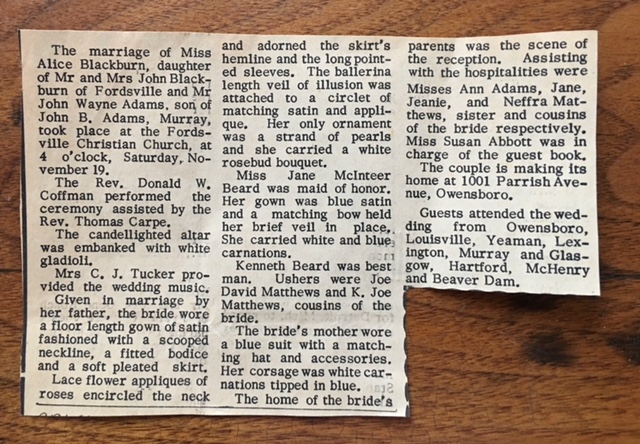
From Owensboro by way of Fordsville, it was a pleasant drive, scarcely an hour once we got back on Hwy. 54. I can’t remember the exact route we took, but it was secondary highways the entire way, and lovely.

I’ve been to Mammoth Cave many times.  With  each visit of relatives from out the state, my grandmother organized a trip to the cave, complete with picnic and singing in the car, which I suspect annoyed the adults and I know for a fact deeply embarrassed the children. In college my anthropology buddies and I often hiked on the trails and we applied to work there one summer but they didn’t want us.

There have been some improvements since the last time I visited.  There is a grill and a restaurant in the renovated hotel, and a nice little walkway over to the visitor’s center.  We arrived in time for a late lunch, and while we waited to be served I toddled over to see about tickets.

Now.  Pay attention. 

You really must get your tickets well in advance for any of the tours. On the day we chose—the Friday of spring break—all the tours were sold out and had been for days.  We knew this before we left home, but decided to take our chances.  There was one tour that is only booked on the day of but we were too late for that, too.

However, there is a self-directed tour, the only one now that uses the historic entrance, and for five bucks you can do that one, all day and at your own pace.  Rangers are stationed in the cave to answer questions and keep an eye on things.

Well, now.  This was perfect.  We wandered down to the entrance around 3:00 p.m., the last minute to still enter the cave for the day.  Down a few steps, not so many, and then we were  in the cave, walking past the saltpeter mines, listening to the ranger tell a group about the tuberculosis patients who once lived in the cave—an experimental treatment that managed to kill them all.

We took pictures, most of them quite awful, because it is really dark, although our camera phones did a pretty good job, considering.  Alice posted a pitch black photo on Facebook of us in the cave, and we had big fun with that, like we were the cleverest people in the world. 

It took us less than an hour to see this small part of the cave and to read the plaques and ask the rangers some questions.  But it was enough for us.  We went topside and spent another hour looking at exhibits and watching a film.

We were hungry again, or thought we were, so a ranger at the information desk suggested a couple of places toward Park City, including a place the locals like, Porky Pig’s, in…I am not making this up…Pig, KY.PORKY PIG DINER We couldn’t resist.

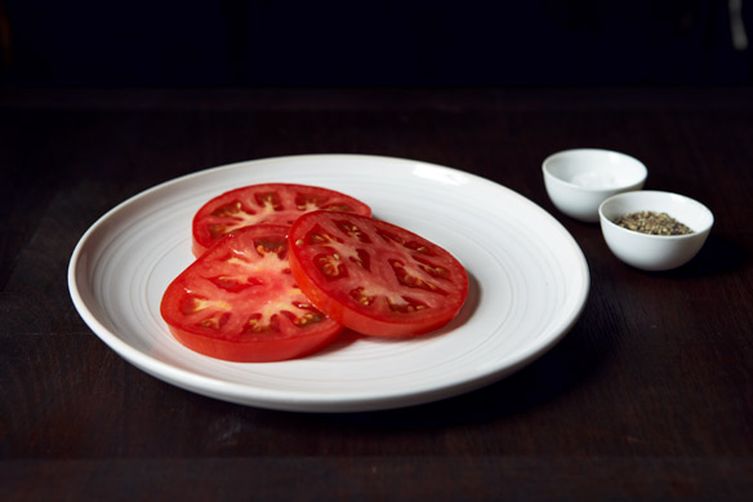
Pig, being so small,was hard to find, but we eventually pulled up in the gravel lot of Porky’s.   It seemed more like a community center than restaurant, with tables dotting the large expanse.  But there was a buffet, pulled pork, and sliced tomatoes and a friendly waitress, so we ate too much and someone bought a ball cap.

We lingered over coffee and cobbler, because we are lingerers.  Even so, I was home by nine. I recommend this little road trip.  A weekend’s worth of fun in under ten hours.

Saying Goodbye

Last week I said goodbye to an old, dear, friend…the first friend in my circle to leave us, and as it is with all such loss, it happened too soon.

Otis L. Griffin, of McLean County, was a civic leader, a large-scale farmer, the husband of my high school pal, Donna. He was a man who gave ballast to our social group and he was my friend.

From the scores of people who came to his visitation, it’s clear he cast a wide net in the friendship department. The line for those waiting to pay their respects snaked out into the hall of Muster Funeral Home. So many came, so many shared stories. So many needed, by their presence, to say how Otis had touched their lives.

I first met Otis in my late twenties—I think it was my twenties—when I and my contemporaries were easing into adulthood. We had jobs and car payments and thought ourselves quite something. Otis was a little bit older, a full-fledged adult compared to our apprenticeship status and he helped show us what grown-ups looked like.

When Donna and Otis started dating he slipped easily into our group, this big guy with quiet ways, one who wore suits on evenings out. Dapper, yes; stuffy, never. I can recall almost nothing of those early days except that we laughed all the time. We had “coming out” parties when someone brought home a potential mate, and I am not sure that it wasn’t Otis who orchestrated an Olympic-style number rating the evening Margaret brought home her future husband to meet us all.

She and Woody were late getting to the party and, as idle hands are the devil’s workshop, we improvised rating cards to hold up when they walked through the door.
Or maybe that little caper was my idea. I know it was Otis who told Woody, “I gave you a 9.5 but then you started talking and I had to drop it to a 6.”

Woody is a funny guy, too, and they were friends from that day forward.

Otis told me once he was in the habit of going to funerals, made it a point to do so. He made a special effort if it was some forgotten soul with no one to be sorry he was gone. We always figured he liked funerals.

No, he told Donna. He didn’t like funerals, but it was the right thing to do. To bear witness. To show respect.

And that is who he was. A stand-up guy, Donna would call him. A traditional fellow, one who honored the earth, served on the school board. A father and grandfather. A protector.

When his two youngest children were little, Donna and I packed them up to drive to Hattiesburg, to see Margaret and Woody and their little one. Otis was staying behind, farming, and as we were loading the car, he was uncharacteristically cranky.
I asked him what was wrong.

“I don’t like it. You are taking away my babies.”

Their mother, I must point out, was in the front seat. It was just that he wouldn’t be there, and me in the driver’s seat was no substitute.

Funerals are sad, but they are homecomings, too. I so enjoyed reconnecting with Otis’s children, Lance and Jennifer and their spouses, and seeing their sweet babies, all grown or almost so. And Caitlin and Sage, the toddlers from that long-ago trip, who are stepping out and into their own bright futures. The Griffin children, all of them lovely and lovable adults. And the next generation of Griffins well on their way.

They have lost a sturdy pillar of their family, but they have not lost their compass. Otis had a way of imparting wisdom and giving guidance without you even knowing it. I learned from him every time we were together. His lessons were quiet, but deep. Otis himself, embodied True North.

The funeral procession meandered along Hwy. 136 amid the redbud and dogwood blooms. Cars pulled over as we passed by the farmland Otis worked, loved. A procession so long the first cars often disappeared around a distant bend as the last cars worked to keep up, like a game of crack the whip. The little country cemetery couldn’t hold us all.

It was, as the Rev. Jim Midkiff reminded us, as far as we could go with him now.

So, Otis, we love ya and we will miss you. But don’t you worry. We will keep loving this family and each other. It’s easy for us. We have some advantage. You have shown us how it’s done.

Bon Voyage, Y’all

On what was the most frigid day of the year to date, I bundled up my car and my pal, Alice, and headed for Louisville, to meet up with friends, one of whom is leaving for France in a couple of weeks.  Beth and her husband will be in Bordeaux for three years, for his work, and we feel so sorry for them.

Oh, the boring  vineyards, and the fruits they bear. The sea, the fabulous foods,  all of old Europe on their doorstep, these two will suffer, I tell ya.  Even so, it’s a big thing to pull up stakes and move away, so far away, for three years, even if you have the sea and croissants for comfort.

So, Alice and I came from the west, and three other pals traveled from the east, so that we might get as much of Beth as we could before she leaves us. The plan was simple, but elegant.  We would meet mid-afternoon, visit—jaw, as my Appalachian friends put it.  We would stretch our legs between eating and drinking establishments and jaw some more.

We started at  The Eagle, on Bardstown Road for drinks, and little nibblies, including the Eagle’s signature pickle platter.

Apparently this is a thing.  Has been for a while.  Pickle platters.  This one  was artistic and charmingly curated, with three kinds of pickled carrots, pickled green beans, and a compote of just pickles, all lovingly brined back there in the kitchen and served on a little rustic board.

After an hour or so with pickles, and the sharing of grilled cheese and southern greens and artichoke dip, we pulled on our scarves, our hats and gloves and moseyed over to Carmichael’s Books, just across the street. Writers can be counted on for this, if for nothing else.  We will flat do our part to keep a great bookstore going. 

Carmichael’s is an independent bookstore, with two locations in Louisville, neither one large or sprawling.  They are small, in fact.  Which makes their impact more impressive.  They don’t carry everything, but you don’t even notice, because, on every shelf, and everywhere you look, you see something you want to pick up and buy. 

My friend, Jason, an Anglophile, led me to the tiny history section, and pulled out at least five books I might consider to further my education on the British monarchy.  We lost ourselves completely, each one gravitating to a corner, soon to have our necks bent over the pages of a book, and when we weren’t standing stock still reading, we were seeking each other out to share what we had found.

Books and magazines bought, we wondered in and out of a couple of unique speciality stores, dropping money like breadcrumbs on this cool thing and that.

But now, really, it was time to eat again.  So we headed to Douglas Loop to Migo, which specializes in small plates and tacos, and pitchers of grand drinks.  We ordered one of those pitchers and continued our conversation, a quiet chat to the left, a group chat to the right, a story for the whole table.

There is something sweet about old friends that don’t see each other often but are never far from each other’s minds. I noticed the slow and calm way the day unfolded, with an ebbing and flowing as we changed seats to have a quiet word with each other, small conversations that settled in among larger ones, the nesting dolls of intimacy and affection.

We weren’t quite ready to bring the day to a close, so we toddled across the street to Heine Bros. for coffee, using the excuse of needing the caffeine for the drives home.  Now we sat in companionable silence, much like we do in the mornings of our writing retreats, a little family, happy in ourselves.

Finally, though, we had to move.  Kris and Beth were off to Chicago the next morning to get visas from the French consulate.  A thousand tasks for such a move, and we were fortunate to find this one Saturday to see Beth before they leave.

And, really, no goodbyes. We love Beth and Kris, and three years is a long time, but I don’t think we were sad.  There is such joy in this opportunity for them.   Jason will see Beth in June.  I plan a September visit.  They will get home at least once a year.

The hugs and kisses flowed, and flowed again.

And so, they will go, and they will take our hearts with them.  And I hope they know we will wait patiently for their return.   That we aren’t going anywhere, haven’t gone anywhere.  That we are all here.  Right here.