Category Archives: Uncategorized

Meet Me In St. Louis, Louis

My first big trip out of town as a child never happened.  I was seven and my parents, brother and I were going to St. Louis for the weekend to stay with friends and go to the zoo.  But then, on Monday, October 22, JFK spoke to the nation at the height of the Cuban missile crisis, and my parents pulled the plug on the trip. 

They were afraid we would get there and not get back, since the new interstate highway system was also part of our civil defense.  We were leaving my two younger siblings with my grandmother and that worried them, too, not being able to get back to them.  Frankly I didn’t see the big deal, but the decision was made.

My girls group traveled that very highway last week to visit St. Louis, where our pal, Linda has settled, and it was a great time all the way around. Linda is St. Louis’s biggest cheerleader and she her husband, Tim, know all the best things to see and do.  And eat. 

We stayed in the Central West End, at the Chase Park Sonesta, an fine old hotel with helpful staff, a pool, and movie theatre with multiple screens attached to it.  And real popcorn, you all, real popcorn.

It charmed the socks off us, as did the neighborhoods we visited. Linda and Tim are foodies, so we had reservations at some wonderful places.  My favorite was Frazer’s, which served a mean Manhattan and the best halibut I’ve ever had.  I’m not much of a fish eater, but I could have this dish five days week.  

We moseyed back to the hotel by way of an ice cream parlor and got back to our rooms around ten, where we commenced our “grandmother shower” for our friend, Margaret.  She is expecting her first grandchild in November and I had generously offered to host it later in the fall.  We thought we could load her up with all the stuff she will need when the baby comes to visit.  Someone suggested doing it in St, Louis since we would all be there. Julie and Nancy hit the Dollar Tree for decorations,  headwear, and party favors, and I got completely let off the hook for a shower down the road. 

Plus, we surprised Margaret and that is hard t do. 

The next morning we wandered down to the lobby to meet up for cooking school, out in Chesterfield, where Chef Laura walked us through a Mediterranean salad, herbed pork tenderloin, homemade pasta with a tomato and vodka sauce.  I was irritated by all the side conversations and inattention of my fellow students, because I am a serious home chef and I was trying to take notes.  

We had to hurry back because some of us wanted to sit by the pool.  I took a nap.  I also went exploring.  I needed some aspirin and Linda suggested I check out the pharmacy in Ladue–a very nice part of town–and I found it, in a little strip mall and crammed full of the most wonderful things.  It is a pharmacy, yes, but also the purveyor of great soaps and body lotions, interesting gifts and even toys, plus an excellent small, but well curated, book section.  I bought things for me, and a couple of Christmas gifts, besides the aspirin.

Linda and Tim had us back to their home for drinks before dinner. Their home might have been in Manhattan, it was that cool.  Soaring ceilings, the walls painted rich colors, interesting artwork, and Blanton, the biggest and sweetest and best-behaved something-doodle I have ever met. We talked over each other while Tim quietly served us drinks. 

My parents and brother and I eventually make it to St. Louis. I was going to be Jane Goodall, had watched her for years with her chimpanzees, not unlike my stuffed one, Zippy, and this was going to be my life.  I would work along side her, a chimp swinging from my neck.  I couldn’t wait to get to the monkey house to see them. 

Alas, my career goals were crushed that very day.  Never had I smelled anything so awful.  And I had two toddler siblings.  I opened the door and gagged, ran as fast as I could through the monkey house,  never to think of them again. It was a sad and clarifying moment, and I only admired the great apes in the  pages of college anthropology texts after that.

Some Notes on the Passing Scene

These surely are the dog days of August, making us sweat and enticing us into the streets to chant “Attica, Attica” along with a young Al Pacino.I am confident this will be the last worst week in terms of temperature for the summer. We may still have some hot days but with September comes a different underlayment for all that heat.  

Even if humidity is high, there is still that certain something that promises fall.  The heat may be awful, but it doesn’t penetrate in quite the same way it does in July. Weeks can be peppered with days that are downright autumnal, and they catch us by surprise, the way they just sort of waft around us. The heat then returns but so, too, do   the signs that signal the fading away of summer.  First in the flowerbed where the annuals are already checking out, then the trees and burning bushes give hints of the reds and golds to come. 

My house project has kept me from being the good aunt I want to be, tying me down when I should be helping my niece, Katie, with the twins and Cy.  I don’t worry too much, though, because she has good help, and none more wonderful than her next door neighbor, Bev.  We all should be so lucky as to have a Bev.  She has taken this little family next door to heart, and there are popsicles in her garage fridge to prove it. 

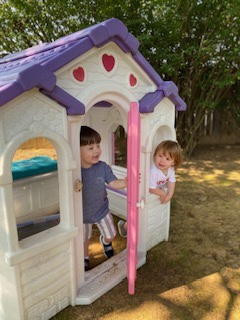
Cy makes a bee-line for her whenever she is out.  First, he loves Bev, and second, he loves popsicles.  She is that neighbor, who hears the babies screaming and comes over in her unassuming way and offers to hang out for a while, or to take Cy for a walk.  She is always uncovering toys and wonders her kids and grandkids no longer need:  a bouncy house, and the best thing ever, a play house with doors and windowsills.  Cy loves it and he “mows” the grass around his little castle almost every day.  

She comes in with little duds for Cy and the babies, “free, practically,” she always says, because she is a savvy shopper and hits the sales.  I’ve met her daughter, too, someone else Cy loves, because she gets him popsicles, as well,  but only after asking Dad if it is okay.  Those neighbors. A true blessing for a young family, and they love her. 

And Maui.  What an awful thing is the devastation and loss of life in Maui. Paradise is not supposed to burn, and from everyone I know who has been to Hawaii, it is pure paradise.

The banyan tree in Lahaina, grown huge and branching into sixteen trunks.  Early on this is one of the first things my friends who have seen it were sad about. That was before the horrifying news about the loss of life began to trickle in, and now the grief is for them, and the families still working to locate loved ones.  

The ones who died in the sea trying to escape the flames.  The ones who died running inland.  And so many of them children, it is feared, in the town of Lahaina, where the parents were at work and they were at home when the flames arrived. A terrible tragedy and we pray for our island neighbors. 

We said goodbye to Ann and Logan on Saturday, my sister-in-law’s mother and her second husband.  They were college sweethearts for a time, and reconnected  decades later at a class reunion at their old college.  By then, Ann was living in Owensboro and Logan joined her, and they would have been married twenty years this Thanksgiving. 

In truth, we lost both of them a while ago, Logan five years ago, and Ann in February.  But it was their wish to have their ashes buried together, and the blended families joining for a celebration of their lives together, and sharing a meal at the Moonlite, the place we first gathered to celebrate them as a couple that long-ago November. 

This was Ann and Logan.  Easy, fun, practical, and happy as teenagers, sweet and quirky. 

They were permanent fixtures for every family gathering, our bonus grandparents, easy to have around and easy to love.  I am grateful for the gift of both of them, grateful for the extra family members their union brought to our lives.  Grateful for the way my sister-in-law and brother took care of them.  It is no small thing, the simple love of family.  

Three New Books and an Old One

One great thing about having friends who read is that they share their reading lists with me.  Right now I am gazing at a stack of books that have recently arrived and I am looking forward to the next rainy afternoon when I can sit with lots of coffee and a blankie so we can have a nice long visit. 

Right now I am about a hundred pages into “American Prometheus,” the Pulitzer Prize wining biography of  J. Robert Oppenheimer.  I am reading it because my pal, Alice is reading it, and she is reading it because her granddaughter, Leah, is reading it.  They are preparing to see the movie, “Oppenheimer,” in an IMAX theater in Nashville, and so much study.

It is big, in every way a book may be big, but it is so well-written I find myself feeling a bit unsettled if I don’t check in with Oppie on a regular basis.  It gives the reader a fascinating glimpse into the world of  Oppenheimer as a young physicist, but also Oppenheimer as an odd duck, but then, genius, I am told, often has its quirks.  We meet other great scientists along the way, as Oppenheimer’s path crosses with some of the greatest minds in the field.

This book is a biography, yes, but also a work of history, weaving the personal, professional, and political into a fine strand of mid-century geopolitics.  Don’t be daunted by the size of the book. The last hundred or so pages include author’s notes, footnotes, and bibliography. 

Another book of some size is Abraham Verghese’s “The Covenant of Water.”  You may have read his “Cutting for Stone” several years ago.  It was a gorgeous book, the story, the writing, the cover, all beautiful. This one looks to be right up there with it. Set in the first seventy years of the last century, it is a story of three generations of an Indian family that “suffers from a peculiar affliction:  at least one person in each generation dies by drowning, and in Kerala, water is everywhere.”  This is from the dust jacket, but it goes on to tell us, this is a story of a bygone India, and it is also a study of the passage of time, itself. This sounds like a depressing premise, perhaps, but I can tell you,  in Verghese’s hands the story will be beautiful, deeply human, and  will linger with the reader long after the last page is turned. 

Now here’s one.  “The End of Drum-Time” is set in the frozen tundra of Scandinavia and is a love story and exploration of faith, culture, and  history as they bump up against the Indigenous Sami people.  As an anthropology student, studying the Sami was just about my favorite thing.  Here is a fact I will share.  They tend to have very round heads because the Sami gently pat and shape their babies’ noggins, thinking, as they do, that round-headed babies are the most beautiful. And they are.

My night-time reading is an old John Le Carré, “Tinker Tailor Soldier Spy.”  This is a really good one, a novel based on “The Cambridge Five,”  who were uncovered as KGB moles during the 1950s and 60s.  In fact, Le Carre’ is credited with popularizing the word “mole” for a traitor spy.  He should know all about spy craft, having been a spy himself. 

I will confess here I have to go back and re-read chapters since I often fall sleep as I am reading, but I don’t mind.  The story is good and the characters companionable, and I have always had a thing for shambolic old George Smiley. He is brilliant in his unassuming way, and that is always attractive.

Napping for the Uninitiated

No one hated naps like I did as a child. Hated them.  I learned years later my mother didn’t really care if we slept or not.  She just needed us behind closed doors for a little bit.  Behind those doors and quiet.  I took umbrage.  One of the biggest tantrums I ever threw was over a nap. 

I still don’t nap unless I am sick or overtired from a big weekend.  There was a short stretch in college when I napped in the afternoon, mostly from boredom because my roommate and everyone on the hallway was asleep so I just gave in and joined them.  Then we all woke up at the same time and toddled down the hallway like a bunch of kindergarteners going for a bathroom break. 

My friend, Margaret, is a champion napper.  She loves them. Years ago we were all sitting around chatting and the talk turned to the time of day each of us was born.  When Margaret said she arrived early in the evening, her husband said, well, of course.  She wanted to get one more nap in before making her appearance. 

Last week, though, I was introduced to the disco nap and I quite liked it.  I was visiting friends in Lexington and we had dinner plans, and not even at a particularly late hour. By mid-afternoon the hosts wandered off one by one and so did the other guests, and I followed suit, heading to my bedroom with my phone and Kindle. 

The day was especially hot and humid but my room was dark and cool and while I didn’t sleep exactly, I drifted in and out of awareness, stretched out as I was on the most perfect bed known to man.  When I got up a half hour later the rest of the house was stirring and congratulating each other on their satisfying disco naps.  

Disco naps-who knew?  

In fact, there are several categories of naps with their own charms and benefits. Let’s start with the disco nap.  Lasting anywhere between thirty and sixty minutes, the disco nap is just that–a nap designed to restore and prepare you for your evening of disco dancing or any late night activity that requires stamina and energy. 

The cat nap is similar but they are shorter, twenty to thirty minutes, and have been credited with having heart and blood pressure benefits if taken a couple of times a week. I can’t imagine this bit of data, because it is during a cat nap I am most apt to experience the dreaded nap jerk, and I am telling you, my heart hammers out of my chest with a disconcerting vigor. 

The power nap should last between fifteen and twenty minutes and has been widely praised for its ability to be taken while sitting in your office chair.  Not only does it rejuvenate you, it may help improve your short and long-term memory.  Here is the ultimate way to power nap if you drink coffee for the caffeine boost.  Drink a cup of coffee, then take a power nap immediately after.  The caffeine will kick in just about the time the nap should be over, so caffeinated and rejuvenated and ready to get back to the grind. 

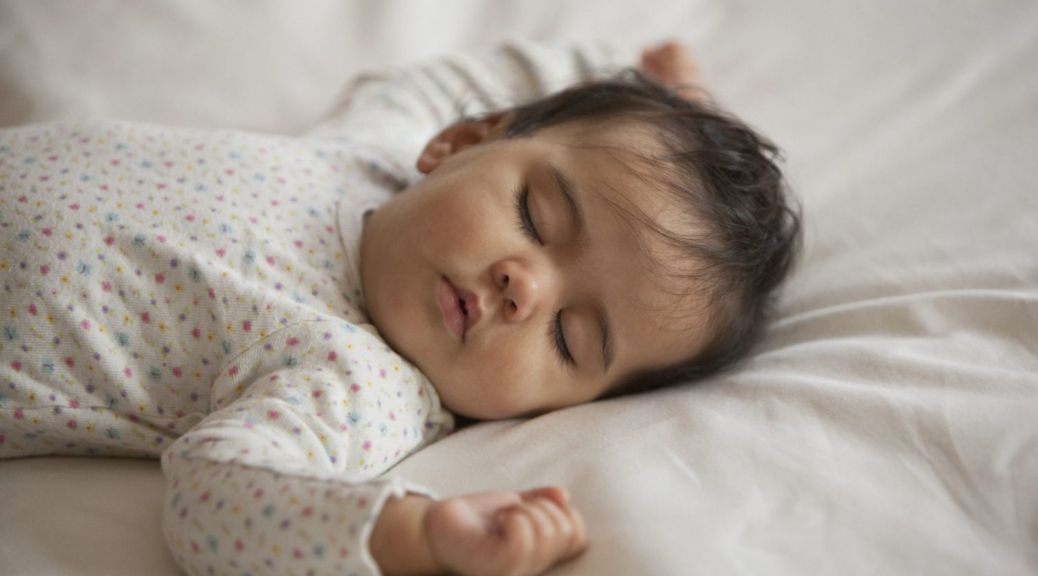
The full-on nap can last up to an hour and a half without disturbing nighttime sleep, at least in theory.  Babies and toddlers take full-on naps.  My mother dreamed of her children taking such naps.  Only my sister, Kathy, was a napper, and it was a pity, because she was also the quietest and best behaved of us and her disappearing for a couple of hours was a waste of peace and tranquility.  

Ah, well.  I may start working naps into the rhythm of my days.  It is true I slump around three each afternoon. Instead of napping or walking I tend to eat, and you can bet it isn’t anything healthy. So, sleep it is. I will call them disco naps, because I like to think I still might be able to. 

And my poor mother.  Her needs met, decades and decades too late. 

Julia Child and Me

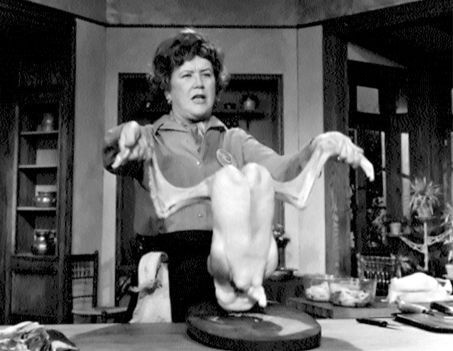
With construction in the back yard a continuing and noisy mess, I have turned to old episodes of Julia Child’s The French Chef to soothe me.  These are the original PBS shows, shot in black and white, the shows and the recipes housewives all over the Boston area fell in love with when they tuned in to WGBH, their local public television station.  These shows first gave us Julia and that voice, that presence. 

And about that voice.  Distinct, yes, but not the caricature we all know, and let’s be honest, the one we have all mimicked.  I am ashamed of that now, because this early Julia is delightful and no-nonsense and she only wants to help us feed our families well.  And if we feel pride in that accomplishment, even better.

I hopped up after the first episode I watched and I made the perfect French omelette.  Yes, I did.  Thanks to Gordon Ramsay I had the first part of the process down cold, but the slide and flip, that is all Julia and now, I can’t wait for some overnight company to show off my mad skills come morning.

I am not going to tell you how easy it is–but it is.  It’s just eggs and butter after all, but it is what you do with them. 

And here I confess I don’t want to tell you about the omelette at all and I don’t want you to be able to make one.  It is small, petty of me, and I know it.  But then, it occurs to me that Julia Child, a Cordon Bleu chef, dedicated herself to demystifying French cooking. She wanted to share her skills and expertise with us, and so in a spasm of entente, hands across the water and all that, here I am.

The first episodes were filmed in 1963 and, unless you remember TV in that era, they can be challenging to watch.  The drab gray tones and soft contrast of the film give everything an anemic look, and the food suffers the most.  We must take Julia’s word for it, how pretty the dishes look, how presentation is as much a part of a meal as the meal itself. Even the beef looks ashen, the parsley black as ink.  It’s a hurdle to get over. 

So are some of the recipes.  She dedicates an entire show to aspics.  They were big apparently, and let’s leave that right there.  No, thank you, I say, and no, thank you again. But in that first season she also shows us how to make French onion soup, boeuf bourguignon, cassoulet, and crepe suzettes. Roast Duck a l’orange. Pâte à Choux.

And she shows us in half an hour. 

If you watched the HBO series, “Julia,” you know that during each show the floor around her feet was cluttered with assistants and producers crouched down and handing her things, taking the dirty bowls, making her look efficient and prepared.  No doubt this aided in her producing the meals in half an hour.  It is fun, then, to watch the original shows and try to imagine what is happening just out of sight.  Sometimes, as she walks the dish to the dining room at the show’s end, you can see her step around what surely must be people. 

And here I will say, fans of Julia Child owe a debt of gratitude to Sarah Lancashire for her portrayal of Julia.  She doesn’t attempt to replicate her voice, the timbre and pitch.  What she does, however, is capture the warmth and generosity of the woman, her little eccentricities in speech patterns, the tilting of her head, the way she catches her breath and closes her eyes as she thinks what to say next. 

So, as the hammering continues just outside my kitchen, as the sawzalls rip and grind and make me think they are coming through the foundation, I sit with Julia and index cards.  I replay her slicing an onion, dismembering a chicken, whisking a sauce. I sit and bask in smugness when she talks about tarragon, how hard it is to find it fresh.  Not at my house.  It grows right outside my door.

I find her old episodes on YouTube.  I almost forgot to tell you that. But never let it be said I am one of those cooks who omits the most important thing.  I hate those cooks. Just don’t share it at all if you are going to be like that.  And to the rest of us, bon appétit.

Reunion 2023

The number was big, nice and round and unimaginable when spoken aloud. The time of year was wrong, June not August.  These things have always been held in August, in horrible heat and humidity, down on the river, so we could get our faces right into all that tropical, asthma-producing swelter. Held in August so we could work on those extra pounds, work on those tans, work on those outfits to show off those tans, show off those diets, the thinnest ones thinner still, as if to say, What? This old thing? As if they would themselves be surprised by how sleek and shiny their shins, how willowy their bare arms, should they be bothered to look in a mirror. 

They stood in little clusters back then, the adult manifestation of the high school clique, while my group did the same thing.  Not so willowy or tan, for that was never our thing. We were funny, or thought we were, and while we made stabs at sunning ourselves, eating cress, discussing ensembles, our true natures revealed themselves in those pale hours before the event when we negotiated arriving early to get a good table when the food was still plentiful.

Thus our first high school reunions passed in pleasant familiarity, each group staying within the boundaries of the school cafeteria or study hall, but venturing out to greet others, to catch up in happy delight with most of our topics of discussion centering on accomplishment, lifestyle, success. 

Those things were important then.  We measured ourselves by the yardsticks of others, or at least I did. We were adults out in the world.  Making our way. We could never have taken enough notes in class to make that easy or smooth. It was the time of striving. 

I cared about my old high school chums, the ones I walked part of the way home with, though we never hung out, the shiny girls whose clothes I envied and the shiny boys I had crushes on. Of course there was drama, and inadequacies, and self-consciousness and all the angst of being a teen. We stayed in our own tribes for the most part, although the winds that blew through the halls of OHS were generally benevolent.

When this reunion rolled around, I didn’t want to go.  I never want to go.  I can’t explain it.  Maybe it is the holdover from all my old anxieties and insecurities, although I am neither anxious nor insecure now.  But my pals were all going, a few traveling some distance to attend, and there is no getting out of it. I even hosted a small drinks do beforehand, but it was short because we all had jobs to do.

Beth had to deliver some last minute name tags. Julie and Janet had some set up to do. Margaret and Donna had to get there early to snag us a good table. Something central so we could work the room, just like at lunchtime when we hopped from cafeteria table to cafeteria table as we were frantically waved over to hear the hysterical thing that happened in English class, or art, or gym.

The shiny girls still shone, and the boys, too. The late arrivers still came late, wafting their magnificent coolness behind them as always. I mean, cool is eternal.  They have it and I admire it. 

Our classmates, Marc and Donna, created a beautiful video and memorial wall for those of our class who have left us.  So many now.  Some so young, a few months or a few years past graduation, car accidents, mostly.  But somehow, the ones who died with the sun overhead, in the bright midday of life, these broke my heart. The room quieted, every now and then a collective sigh, a soft moan, for someone especially liked. There were sniffles, wet cheeks, the boys working hard not to cry, but failing.  Wives putting  their arms around their shoulders, absorbing the sobs they didn’t want anyone to see. 

Marc said after working on the video he just felt blessed to be here, at the river, talking to old friends.  Suzanne, whom I last saw at the Sportcenter in her cap and gown, said we are now our parents, we are next.  

And we are.  

  Maybe that is why the evening passed in such sweetness. The years, fifty of them, slipped from each face and we were back in Spanish club, chemistry class, Rash stadium with cold noses and feet. And not even reminiscing, really because who can recall the ordinary days so far in the past? Snippets only, but important ones, just enough to remind us how we once belonged. And for a few hours on Saturday night, we were bound to each other again.

In that long ago Sportscenter parking lot we stood in huddles, hugging and crying because the crying seemed to be required,  but mostly we were excited and scared and ready for what was next. This weekend we stood in huddles, first this one then that, and hugged again, thinking of accomplishments and loss, and the soft landing that allowed us to be there, all in one place.  And maybe a little scared. And maybe a little excited. And maybe a little sad. And here we go, out into the unknown, once more.

False Indigo

My brother’s former mother-in-law was a holistic gardener. She loved nothing better than digging in the dirt, her best dirt amended by cow manure and kitchen compost and who knows what all. 

But natural what all, I can assure you. She offered me help in thinking through my early attempts at gardening. She suggested I get graph paper, spend my Januarys sketching out my plantings, but only after I made charts on the way light falls in my yard in each season, a task that should start now. 

Perhaps I bought some graph paper, some tracing paper to shade the shadows. It is the kind of thing I have energy for early in a project. My follow-through is poor, though. So nothing came of it. 

I think I am doing something when I read the little arrow-shaped tag stuck down in plants, the ones that tell you about spacing and growing habit and if the plant likes sun or shade. Mostly I wander around like a child, tantalized by any shiny thing, and that is how the false indigo came home with me.  The name. I love the name. 

And it’s real name is nice, too.  Baptisia australis. 

Turns out false indigo is a perennial, more bush than flower once it establishes.  It grows and spreads and in a week or so from now it will send up beautiful flowers, more purple than blue.  Good for me, because I have another one waiting to be planted on the other side of the porch, not quite in symmetry but close enough. 

“False” in this instance means this: something that is not what it appears to be. Baptisia is not the stuff that makes our jeans blue, but then neither is true indigo, not anymore.

But there is something romantic, slightly forbidden and therefore exciting about anything with the word false in front of it. False front, false bottom, false face. A word that leads to wrack and ruin, yet an allurement, even so. 

But false indigo is a happy plant, and about the only thing it attracts are butterflies.  The Frosted Elfin, the Wild Indigo Duskywing, the Hoary Edge butterfly. Baptisia lives in regular soil, resists pests and bother, fills out nicely in adolescence, easily divides in fall if it has grown too big for its britches. 

My kind of plant. 

Should you see one potted up, the leaves will be bobbing and dipping on a slender stem and you may wonder if it has gone leggy.  It has not.  Take it home and love it, for it is only false in the way it resembles its exotic cousin. Give it some room, don’t bury it too deep, and wait a year or two. 

It grows like it belongs and that is always a true thing. We see it in plants.  We see it in ourselves, those times we know, just know, we have found our people, found the place our feet fit best, the times we thrive with the simplest and easiest of things. Sunlight. Good dirt, some appreciation, rain when it falls, contentment when it doesn’t. That feeling when something we do on a whim works out, beyond all expectation.

The Timing of Things

It has been a little painful, passing up plants at my local nursery.  I would say I have shown restraint, great restraint, in the purchasing of flowers.  Even so, I have managed to make two big shopping trips, although I know by the middle of June my yard should be cluttered with big equipment and big guys using it as they start my home improvement projects. 

As I cruised the aisles of plants and flowers, succulents and ceramic pots, I decided I needed to move my summer operations to the little side porch that I used to enjoy.  It was here I had pots and pots of Gerber daisies, geraniums, and hanging baskets of weepy things, lobelia and creeping Jenny, wave petunias, English ivy.  These were heartbreaking disappointments for me because the birds loved them.  They nested and fed their young, and destroyed the plants completely.  The more expensive and exotic the hanging basket, the bigger the family that occupied it. 

The neighborhood changed a bit, for the better, actually, but I began to use the porch less and the back yard more.  But now adjustments must be made. I have purchased some begonias, a New Guinea impatiens and a couple of things I can’t name, and soon my little porch will be overflowing with granny flowers, and I shall sit there, in my cotton house dress, hose rolled to my knees, watching the world go by and offering the neighbors a chat and a Co-Cola. 

I have it in my head this spring has been “back to normal,” with cool mornings and evenings and warm dry days in between. Perfect weather.  Each day has seemed just the right length, an hour exactly an hour’s length long. The month, though, has sped by and I can’t quite make sense of it when I try to put these two things together.

This Memorial Day weekend I will take flowers out to Elmwood Cemetery where my people are buried, and I will take my sister, perhaps, because for some reason I can never find my Granny Opal.  The Skillmans are within spitting distance of the McDonoughs, but I miss them every time.  This is a pity, because I think I would like to buried next my Granny Opal, and I worry my loved ones will one day not find me, either. 

Although I am not sure about the logistics of a cemetery visit this year. The parents of the new twins will be out of town overnight and it will take grandparents, , aunties and uncles to pick up the slack.  We feel old an ineffectual with the three little ones. Especially when we see the picture of Daddy, flaked out on the bed, feeding Gretchen a bottle with his right hand as she lays by his side, Harmon flat out on his back  and thinking deep thoughts as he balances on balances on Dad’s left leg, Cy wallowing at his feet, and poor old toothless Nellie almost invisible among the tangle of clean baby clothes. 

There must be a ball game on the TV just out of frame.  It seems to soothe them all, even the dog. 

We trooped up to the cemetery when I was a kid but that was about it.  My grandmother, who never let the chance to entertain pass her by would call around nine on Memorial Day, suggesting something simple in the afternoon, a cookout with hotdogs and hamburgers and macaroni salad. We showed up with a couple of bags of chips and maybe some brownies, and it was as easy and wonderful as that. 

Summer doesn’t officially begin until the solstice later in June, but Memorial Day is the emotional start every kid’s summer, and most adults would agree.  I am hoping for a few more weeks of mild and sympathetic weather, cool mornings, just enough sun and gentle rains to give my zinnias and tickseed, my false indigo a good start.  A few more days, maybe, before those big guys show up, although I also want them to hurry.  And there it is.  The way time moves, and doesn’t move, and our relationship to it.  The way we don’t have time, and do, and how we can sit on the porch and watch the world go by, or gin around and make macaroni salad for the bunch. 

And sometimes all of that in single day, an easy day at that.

Taking the Hindman Cure

The campus looked much the same, at least at first glance, the slanting of light as it does in late afternoon,  and everything just a bit hazy and just a bit dappled and in spring, just a bit too green.

I have not been on the Hindman Settlement School campus for years now.  Not since the pandemic and perhaps a couple of years before that. Sometimes I might drive over for a couple of nights during the Appalachian Writers Workshop, but mostly I keep up with the goings on with newsletters and Facebook posts or chats with friends who are through there often. 

Last weekend I packed up the car and my old pal, Alice, and we headed east for a weekend writing retreat.  We would be there in time for Earth Day, and we would see Silas House, the retreat leader, just days before he became our Commonwealth’s new Poet Laureate.

The weather was good, the porches were full, friends I’ve just met, friends I haven’t seen for years, and friends I have only known as Zoom boxes were there, and it was fine, fine, fine. 

That sounds like it was a horde, but really, we were less than twenty, and a perfect number. For some, it was their first glimpse of the campus since the devastating flood last year. For others, it was that and then some.  They had been at the settlement school the night the waters rose, the night they huddled in the dark on higher ground, the night terror could only be gauged when lightening illuminated the approaching water.

The staff and volunteers have done an heroic job of cleaning up, setting the place right, and the flood’s damage isn’t so obvious to the casual eye.  But there, around back,  a boarded up window, here the door propped up against the side of a building, the door that flood waters ruptured and allowed a torrent of rushing water into the room where two staff members stood as they tried to save what they could.  First water around their ankles and then an explosion of force and water chest deep. 

We asked for their stories. These conversations were quiet, small.  Murmured remembering, soft whispers and the space to hang suspended for a moment, above Troublesome Creek, above the watermark, safe in the moment and together in a precarious world.

The settlement school sits on the side of a hill, looking out across Troublesome, and Highway 160 just beyond, a snaking road carved and dug from a rock face.  Over there the meadow, over that way the town. On Saturday the campus filled up with carloads of families, girls in first-time formals, every thing in their way, the high-heeled strappy sandals, the tight dress or the volumious one, neither designed for car rides and walking on uneven ground. Their stiff necks, corded and craning, a great balancing act of hair—piled, curled, bedazzled and unnatural in every way. 

Boys in tuxes and Chuck Taylors, cool young men.  Only their hands give them away.

Beaming parents, younger siblings, a photographer with a gigantic lens, posing the prom-goers on the bridge, in front of Uncle Sol’s cabin, any number of beautiful late afternoon spots. 

We forget sometimes the settlement school doesn’t belong only to us. From the beginning it anchored the community, served the community, held the town in its lap like a mother. And the town of Hindman often returned the favor, and has done since the first days. 

Some of us spent the weekend writing, some didn’t write a single word but listened to the words of others.  Some of us, and I am in this number, carefully filed and bookmarked the great writing Silas shared to celebrate the world around us.  I will read it later. I had to get my quota of laughing in, the old stories I have heard a hundred times and ones I might feature in.  The stories of new friends about people I don’t know, as funny or funnier than we think our stories are.  This is more lullaby to me than the brook skipping over rocks outside the window. I didn’t sleep well, but I loved long alll the weekend through. It is the nature of the place. And it remains.

Hindman was hurt, but she heals.

(Feature image: Lisa Parker, 2023)

Judging Books By Their Covers

There is much to be said for the  cover of a book.   We all know what lies within may, or may not,  bur well-written.  However,  when the two match up, cover and content, and in a good way, it is a joy not to be taken for granted. 

Here are some of my best loved books, in no particular order, that are as pretty as they are wonderful reads. In fact, sometimes I just go gather them up, together or on their own, to look upon their loveliness.  

In an English bookstore somewhere in Prague, maybe, or Krakow, I picked up “The Miniaturist” by Jessie Burton.  I needed something for the flight home, and the cover just compelled me.  I would describe it to you, but the book is long gone.  I gave it to my friend, Alice, to read.  She refuses to give it back, doesn’t even act sorry that she won’t return it. 

Talks about how it will hurt the book’s feelings and other such nonsense—although she actually believes this, I think—but trust me, the cover is beautiful and the story, set in a 1600s Amsterdam, is wonderful.  So much better than the mini-series. 

Jessie Burton has written a sequel, “The House of Fortune,” and I was so eager to get it I ordered it from London.  This cover is beautiful, too,  the end pages like elegant wallpaper and the text block and foot bands, too. I haven’t read it yet, so I keep it tucked out of sight for those times Alice visits. 

“The Essex Serpent” is another book with a beautiful, flowery and mysterious cover.  My pal, Silas, pulled it from the shelf when a bunch of us were book shopping, just to show me the cover. He said I didn’t have to buy it, he just wanted me to see it.  So, of course it came home with me and sits with my other chosen few, on a bookshelf all by themselves.  I’ve read it twice now, maybe three times, mostly to hold it in my hands.  A hardback book is as comforting as a blankie, all warm and the hefty, but not too heavy. Engaging the senses, the way it smells, the way it feels, the way the words make images in your head. 

Perhaps my favorite book is “Kristin Lavransdatter,” by Sigrid Undset.  This book is not so easy to hold, as it runs 1124 pages in the paperback edition.  But it is a trilogy, three novels in one, so I can forgive the length. The first of the books was written in 1920, and they follow the life of the title character from her adolescence into her adulthood. Set in 1300s Norway, it fascinating and yet relatable.

My friend, Charlene, recommended the book and she would never steer me wrong. I am so glad she told me about it.  Everyone I know who has read it loves it, and vicariously loves Charlene for the recommendation, too. 

Get the Penguin Classics Deluxe Edition.  It is beautiful and is translated by the award-winning Tina Nunnally.  Oh, and Sigrid won the Nobel Prize in Literature for it, too.  This might be the one book I would recommend also in the Kindle edition, just because of the size of it.  But at least look at and admire the cover. 

The hardback edition, the one with the feather, is my favorite edition of “Hamnet,” by Maggie O’Farrell. It will break your heart—the cover and the book.  A fictionalized telling of Shakespeare’s family life, and his son, Hamnet is beautiful written, compelling and fascinating. It is really a story of the plague, but so much more. 

I needed a copy of “A Tale of Two Cities,” for my book group.  I settled on a copy from Penguin Classics for only one reason.  The cover is blanketed in knitting needles and yarn all done up.  Now, who could pass that up, when one of the most iconic images in literature is Madame Defarge sitting by the guillotine, knitting?  The print is minuscule, and I mean, fine print tiny, but I don’t care.  I upped the magnification on my cheaters and off I went.  

“A Tale of Two Cities” is hard on me, fine print notwithstanding.  But I like knowing it is there, on the shelf, with my other pretty books, and that any time I want I can take it down and pretend to read it. Or actually read it. We will both look good, however it goes.