Category Archives: Uncategorized

Ukrainian Forest, with Cuckoo

It was decided we should go to the forest and grill meat. Our social work conference had come to an end earlier in the day and the afternoon was given over to dancing and celebrating and music, as these things do in small Ukrainian villages. “Mama” had a boyfriend who lived on the edge of the forest and she insisted we go. He would start the fire and wait for us.


We loaded the small van with onions, jars of pickles, thick bread and raw sausages, bottles of the local vintage, benches from the small community hall upon which we would sit for our thirty minute ride. First in the van was an electronic keyboard. I know, I didn’t get it, either.


We arrived just as the last vestiges of day fled the skies, the small clearing where Mama’s boyfriend’s cabin stood shrouded in mist and that other, eerie thing you can’t see exactly, but the hair on the back of your neck knows is there. The forest lay just beyond the clearing, deep greens and black, a small fire blazing orange and crackling in the dark, a blue haze around the cabin, Mama’s man standing outside the door and playing the trumpet, something mournful, to greet us.


What transpires next is a bit confused, but the electronic keyboard was set up close to the fire, spirits flowed, meat was grilled, the keyboard player cranked out endless refrains of “Černy Glahse” or something that translates roughly “black eyes.” This is what I was told, or worked out for myself.


We sat in a circle on fallen logs as bottles of spirits and plates of grilled sausages were passed in swift rotation.


It was dark, thank goodness, so I could pass the bottles of sliivoice and wine with barely a sip. More worrisome were the sausages, so I took small pieces of meat, nibbled around on the charred bit, tossing the rest over my shoulder and into the woods, and thus avoided the three-day bout of debilitating food poisoning that brought down my travel mates.


While my friends were busy honing their singing skills and incubating listeria, I closed my eyes and tried to isolate the night sounds that made their way through all the glad revelry. It was in these woods, during a lull, that I heard it. Thought I must have it wrong, listened harder. There it was again.


A cuckoo.
In the forest.
In Ukraine.
With sausages.


It turns out the cuckoo is a horrible creature, kicking eggs out of nests to lay their own, so some other, better mother might hatch them, never suspecting her own babies are somewhere down below, not to be.


Just then, though, I didn’t know this about the cuckoo, and the cuckoo’s call at evenfall was mysterious and mythical and somehow made sense of the events unfolding around me and explained my presence there, too. This bird in a tree helped me feel grounded and present–and amused and filled with love for the forest, that bird and my sweet companions.


It was earlier this summer when I was awakened, every morning at 4:30 a.m., by a cuckoo, or a bird sounding very much like one. This went on for weeks, disrupting my sleep and puzzling me. The voice was similar to the mourning dove, that odd, mechanical and hollow hoot of summer mornings. But it wasn’t a mourning dove.


A friend asked what the bird looked like, and it never occurred to me I might see it in a tree, attach the call to a particular bird. I did some research, and we do have cuckoos in North America, but their call is different from their European cousins. I studied the plumage, vowed to get up early the next morning and go outside, see this bird.


The next morning 4:30 came and went and no cuckoo’s call. Nor the next morning, nor the next.


A younger version of myself might haven been bothered by this, strident to prove to others and herself, she really did hear a cuckoo, bringing it up in conversations no one could possibly care about, just to prove herself right. That old insistence to be taken seriously.


I don’t care quite so much about that anymore. But I wonder. Was it a sign, a gift, a secret message for me to decode? So much to put on a thing so fleeting and flimsy as a bird’s call. Or maybe, it was just this. A memory of the forest, and faces lit up by fire and drink and friendship, all smiling, all singing, all together. And somewhere an electric keyboard, and somewhere, a cuckoo.

Winter, Clocks, and SAD

Perhaps I spoke too soon last week, lambasting the time change and so cranky about it. Not a day passed before I heard on the news that several members of Congress were floating the idea of making Daylight Saving Time permanent. For all of us, the whole country.

Hmmmmm, okay, maybe I can work with that.


Some of the persuasion for such a move centers on the current virus crisis and the mental health issues from all the uncertainty, loneliness and isolation. One editorial in September, written by Orrin Hatch, makes an impassioned plea for Congress to act and act swiftly. He tells us with the switching of our clocks to Standard Time, we will experience even shorter days than normal and this and the virus will only exacerbate the impact on mood, the stresses and upset of Seasonal Affective Disorder.


Permit me to remind him that the hours of daylight are the same, regardless of what the clock says. A better argument is this. With Daylight Saving Time we are UP AND STIRRING a bit more in daylight. We are awake during more daylight hours. We don’t magically get more daylight.


Despite his lapse in logic, I am compelled and so let me revise my views. Standard Time. Daylight Saving Time. I don’t care. Just pick one. Make it permanent.


I don’t discount the impact of Seasonal Affective Disorder, or SAD. Not at all. I suffer from it myself, a little. It creeps up on me just after the holidays. The grayness of a Kentucky winter, especially if we have no snow to cheer me, can grind on me in such a way I begin to believe balancing an open package of Oreos on my stomach while watching TV is a core strengthening exercise.


I mope. I molder.


Just yesterday a friend was talking about her dread of the approaching dark days. A real girl of summer, she confessed she even cried over the weekend in a kind of anticipatory grief for the waning sun of summer and the bright autumn days. She had found an article on how to weather SAD, yet so much of it was meant for a pre-COVID world, the suggestions of gathering with friends, or planning a vacation somewhere bright and warm for the worst part of winter. A good plan, of course, if we could even get there to that sunny isle, if we had the money, if the location we picked had low reproduction rates.


And if we could be with people.


There is, however, some evidence that Americans are back in the sporting goods stores, this time searching out winter sports equipment, like we snapped up all the bicycles last spring. In the northern climes snowmobiles and cross-country skis are flying off the shelves and out the doors. Hats and gloves and big puffy jackets are in high demand. Good footwear, too, poles for a little Nordic walking.


I have a couple of those poles around here. If some of you would get some, too, and start using them in what broad daylight we have this winter, I might get mine out and use them, as well. I just can’t bring myself to trend-set this activity. And this is a shame, because I first heard about Nordic walking when I was in Poland a couple of years back. And if the young women who told me about it are any indication, we will all be fit and blonde and beautiful if we would just give it a go.


I confess I like the longer nights, the early darkness when it comes. I like sweaters and blankies and cold-weather food, chilis and stews and potatoes. But I also need light—a candle or two when the coffee table is clear of combustibles, night lights, some small lamp burning in every room.


I’ve been thinking about those little white Christmas tree lights, or fairy lights, which is what I call them when they are draped across mantles or strung across a chest and puddling on the floor. When my European friends entertain, they have them all over the house, woven in and around the kitchen canisters, strings of them here and there, the lighting low everywhere else. It is cheerful and bright and dark all at the same time. I’m thinking of getting some, just to see how a thousand little lights might brighten my mood in this odd winter on its way.

We Need a Little Christmas…NOW!

Last year, on a crisp November day a week before Thanksgiving, I took a leisurely drive out to the country to buy my Christmas tree. I thought I was really something, so on top of things, so organized, so, well, perfect, and I enjoyed basking in my own glow all the way there.


Turns out, I wasn’t that early after all. The lot was a tad sparse but even so I found the perfect tree, they bundled it up for me, and it sat trussed up under my pergola like a petty thief in stocks, its feet in a bucket of ice water, until a week before Christmas.


I tell you all that to tell you this.


In the past four days I have heard of three different families who have already put up their Christmas trees. In their houses. With lights. You know, decorated.


One post on Facebook gave us a glimpse and the words, “The first of my trees is up.” It is an amazement to me that people have more than one tree. There is no judgment in that statement, I am just so disorganized or lazy or something that I think I am Mrs. Claus when I get just one set up, and even then, I don’t decorate the whole thing since it stands in a corner. So, multiple trees just buffaloes me.


But if ever there was a year, a time for early Christmas trees and sparkly lights and something to divert us, surely the year 2020 is it. I think about the scene in “Auntie Mame,” during the depression and she has just lost her temp job at Macy’s because her receipts book is such a mess.


She returns home, glum and worried, and convinces her little family they “need a little Christmas,” right now and she means right now. I think all those Christmas trees going up all over the place are testimony that we also need a little Christmas, right now, or at least something very much like it.


I don’t decorate much for the holidays, although last year I found some cool tin Christmas trees and angels at varying in height from one to three feet. They looked so great all nestled together in the shop, and the angels blowing their little horns, that I bought them all. And they look equally great on my hearth, and festive and happy and I spend about a total of three minutes setting it up.

That includes the trip to the basement, where they reside the rest of the year. Because I have a fresh tree and wait closer to Christmas to get it up, the tin trees are my nod to artificial. They hold me over until I drag the real tree in like a body rolled in a rug.

There are other things we can do as we prepare for the holidays and look for ways to stay calm and centered. I am not very good at ritual, and I don’t mean necessarily formal ritual, although I’m not very good at that, either. I am not even in the habit of returning the can opener to the same drawer after I use it.


In my line of work, though, I have participated in rituals on a fairly frequent basis. Workshops and self-awareness seminars often have an element of ritual to them. My Czech friends seem to be especially adept at ritual in the every day—the lighting of candles when they share even the simplest of meals, even gathering once a month for colleagues to celebrate the birthdays and a table laden with finger foods, and there, a pillar candle lit in the center.


I like ritual, admire it, am almost always moved by it, but self-conscious and insecure when it comes to creating rituals myself. But as the winter comes on, the virus continues, I find I’m drawn more and more to the notion of ritual. And what is the decorated Christmas tree, even in early November, but the physical embodiment of all sorts of ritual?


Therefore, gentle reader, I’m doing my bit. As soon as I finish up here with you, I am cleaning off my coffee table so I can light a candle without all that I own going up in flames. I just got off the phone with Zach, a very nice young man, who will deliver firewood on Thursday. I’m adding the fire pit to my winter ritual, too.


When I have a spare three minutes, I’ll bring my tin trees up from the basement.

Right now, and I mean right now.

cooking with brenda

So far I have managed to get through Covid without watching a single TikTok video, and I am fairly proud of that. On the other hand, I have spent time every day mindlessly scrolling through Leslie Jordan videos on Instagram, watching stand up comics and Allbirds ads on Facebook, avoiding, if I can, anything political, which is hard.


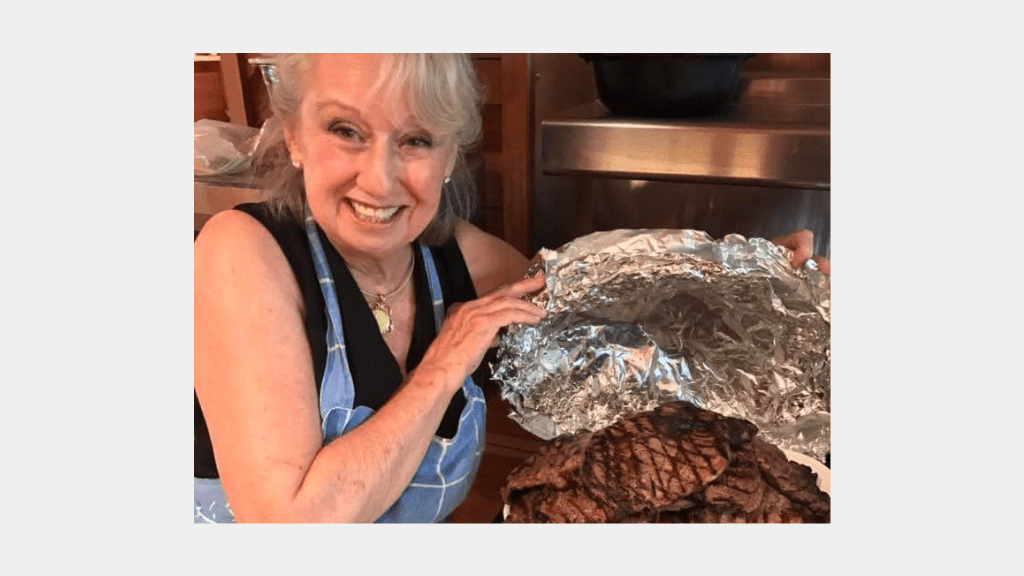
Then, on Facebook one day a cooking video popped up, and there was just something about it. A smiling woman was standing in her red kitchen with the big round Coca-Cola sign on the wall, in front of a large butcher block, her hair pulled back with a wide band that looked a little like a winter ear warmer. She was videoing with her phone, which kept moving around on her. She charmed me no end.


She had been working in the yard, she told us, and she had just popped in to whip up a casserole, explaining she had her old work jeans on because when you are having a hectic day, what else can you do? She was making squash casserole Alabama. With her soft and distinctive Alabama accent, I wanted to visit her every day, I wanted to spend as much time with her in her kitchen as I could.


And I have.


She has let me hang while she has made fried chicken, biscuits, pot roast, marinaded salad, cheese balls, potato salad, barbecued baked beans, anything you could find on a southern Sunday table or at a Wednesday night church pot luck. She does breakfast, too, with locally smoked sausages and grits she cooks for an hour to velvety perfection, and this is how I got to talk to her, in person, and it was a thrill.


I had to get me some of those sausages.

She hails from Andalusia, Alabama, down in the southern part of the state, not all that far from the Alabama and Florida beaches. You may have driven by Andalusia, as it is one of the two “best” routes to the beach that people argue about. She also runs a B&B, the Cottle House, and those sausages are local—smoked right there at the Hill Top Restaurant and Meat Market.


In a few weeks I’m heading that way and I thought, why not stay at the Cottle House, toddle over for dinner at the restaurant and procure a bunch of sausage while I’m there, then head on down south? I figured it was a long shot, since Brenda’s videos, “Cooking with Brenda Gantt,” have become some popular, but it was worth a try.


I phoned the number for the B&B, and guess who answered the phone? Brenda! There, down the line, was that soft, distinctive accent, she was a little breathless, as if she had just run in from somewhere else, which is familiar, if you watch her videos. She usually has. Of course the rooms are booked until February, which I figured they might be, and then she asked about where in Florida we were going. She thought we would be okay after Hurricane Sally in our particular spot.


I gushed a little about how exciting it was to talk to her in person, and she was as gracious and kind as can be. Warm, loving, even. I think that is why I tune in for my daily dose of Brenda. She reminds me of my own grandmothers — kind and in command of the kitchen like one, bustling and busy and energetic like the other.


She has that great accent, yes, but she has an even better smile. She welcomes us into her kitchen and demystifies the cooking process. If you don’t like something, leave it out, if you don’t have something, add something else. Except for when you shouldn’t.


Her grandchildren stop by on occasion, and she leaves us sitting alone in the kitchen while she lets them in and whispers, “I’m videoing.” Then she brings them over to meet us. We often catch her in the middle of things—all dressed and ready to go out or fixing breakfast before church. Or with make-up on and awaiting friends for lunch, or just in from mowing the grass.


It doesn’t matter, she is never too far from the enterprise of feeding her family, which now includes us. She shops at the Piggly Wiggly. She uses old beloved knives and spatulas, cast iron and chipped enamel bowls.

And love. Lots and lots of love.

Old Homestead, new home

It is never easy to dismantle your family home, the sorting through forgotten boxes stuffed in the backs of closets and in dark corners of basements and attics. Harder still to sell the house you grew up in, hard, even when you don’t want it, nor do your siblings, but you don’t want someone else to have it, either. Not really.


After my mother died we debated what to do with our childhood home. It had sat uncared for except for the most basic of repairs during our parents’ illnesses. They couldn’t cope with much renovation, and neither could we. We decided to sell it “as is,” in the hope a nice family would see the potential there, the late Victorian charm. Would recognize the solid, open-armed aspect of the place. We didn’t count on it, but it was what we hoped for.

We got our wish.


It turns out we knew the couple who wanted to come look at it, my sister and brother-in-law knew them, my niece and their son were big buddies from school. They, or maybe, she, had been looking for a house to restore. I wasn’t there the day they toured our old house, but apparently she was a goner as soon as she saw it, and his heart sank when he saw the enthusiasm on her face.


It is daunting, the idea of tackling such a project. But she had done it before, and he agreed to take on the project, as you do.


Two years have passed, and they are ready to move in, but not before offering us a chance to see our old home and what they have done to it. She is a sentimental sort with a deep respect for tradition, and she said, in almost every room, that they worked to honor the history of the house, they wanted to change some things but didn’t want to veer too much from the original.


They kept the wall colors my sister had chosen years ago, because, really, if she doesn’t know anything else, Kathy is a genius at color. They stripped banisters and redid floors, added a better bathroom than the little afterthought one just off the kitchen — and really, who wants a bathroom attached to a kitchen? Added a utility room downstairs, added a nice big addition, reclaimed an old kitchen sink they found in the basement, installed A/C.


I think she might have been a bit anxious about how we would take the changes. She need not have worried. My sister, Kathy, brother, Geoff, and I love this stuff and we had wanted our parents to consider making changes, too. We couldn’t get over what a great job they had done, improving the flow — something Mother always complained about—and making it more livable.


They swear our parents are in the house still. They have heard them. Growing up, we wanted our house to be haunted, but we never heard a peep. They say Mother and Daddy are companionable, and throughout the renovations, they often chat with them, asking how they like the new cabinets, and what about the color in the hall.

I love that. Love that they are restoring our home and are in communion with my parents and with us, too, as they make the house their own. Love that they are students of architecture and know where to find the old mantel pieces that would have been original to the house. I love that we could be plopped down in any room, and regardless of the changes, we would know exactly where we are.


They have left the walls going down to the basement alone. Really, it looks awful, the paint now a dingy green, made dingier by all the penciled names and statements and initials there. The grandkids had written all over it, their names, statements about 9/11, secret messages to my mother “We love you Nana” written on a post, just at her eye level when she came up with a load of clothes.


I found my initials there, too, big ones, full of the ego and frustration of a ten year old girl.
She said they couldn’t bring themselves to paint over it, not just yet. We reassured them, it would be fine, but even so, I like knowing she won’t for a while. Let us stay with them a little bit longer, this new family, while Mother and Daddy rattle around upstairs.

Because of Bacon

My one consistent concession to better health has been to give up bacon. 

I know.  I know.

My relationship with bacon is long and deep.  I see quite clearly the griddle that covered two burners and my mother frying it up  for us on the rare mornings we had bacon.    Boxes of cereal and loaves of bread by the toaster were our usual fare, with each kid rotating around the kitchen table as we descended from upstairs to fight over who got to read what cereal box and to complain about globs of jelly in the butter.

Would you stand at the stove turning bacon over and over with a fork for this bunch of ingrates?  Neither would my mother.  But come summer, and by that I mean late summer, with fresh tomatoes—home grown tomatoes — stacked in pyramids in every grocery store, my mother fried bacon like a madwoman, and we had bacon and tomato sandwiches for weeks.

They were my father’s favorite sandwich and we found great benefit in this.  Mother, too, benefited from it, because it meant an easy supper, one in which she would gladly substitute two hours of peeling potatoes, chopping vegetables, searing meat for twenty minutes of bacon turning.

Once a  friend and I, on a tight schedule to get back to the office, raced to a local breakfast buffet—we were starving and strictly speaking weren’t supposed to be off-campus—and after insisting on a table by the steam tables, made such a spectacle of ourselves with the bacon, that we paid our bills and slunk out, vowing never to return until the memory of our behavior had sufficient time to fade in the minds of the wait staff. 

We never went back.

There is something about big mounds of fried bacon that thrill me no end.  It is almost primal, like the “fight or flight” response, and I can’t be completely responsible for my actions. For years I attended the Appalachian Writers Workshop in Hindman, KY.  In the early days the meals were prepared by local women, good country cooks, and always on the long tables with bowls of scrambled eggs, melons and piles of biscuits was a big stainless steel bowl of jumbled up fried bacon.

Mounds of it.  And they kept it coming, a new bowl emerging from the kitchen as soon as the one on the table ran low.  Thinking of my mother patiently turning  strips on a griddle, I stuck my head in the kitchen once to ask how they managed to serve up so much bacon for such a large group.

“We deep fry it,” was the answer.

Deep fried bacon.  Let us ponder that for a moment.

Yes, it is rapturous.

But, things change and eventually all the dire warnings about nitrates and nitrites and nitrosamines sank in and I have eschewed bacon for better health.  That, and I am too lazy to stand there turning it for 20 minutes.  And it makes a terrible mess that I am also too lazy to want to clean.

But then, I discovered two things, two things of equal importance.

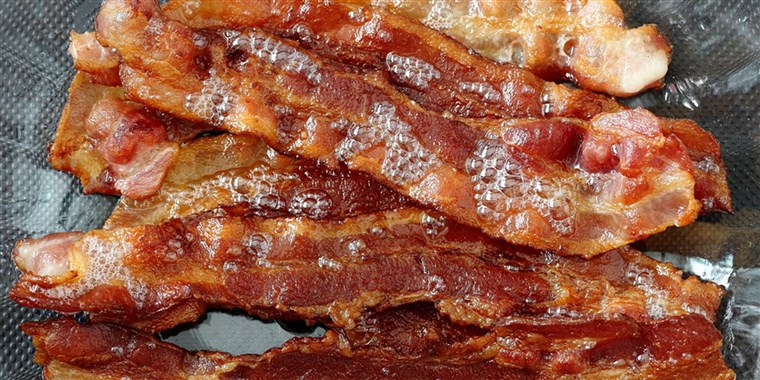
I discovered I can cook bacon in the oven—the same twenty minutes required, but now I can read a book while the bacon is cooking. 

And I discovered Sally Nash’s tomatoes. 

A friend told me about Sally Nash, stating boldly that her tomatoes were the best home grown tomatoes ever, and she hesitated telling me, because selfishly, and quite rightly, she wanted to make sure there wouldn’t be a run on them.

I get it.  I hesitate to tell you now.

I wait until mid-July, early August to start my BLT feeding frenzy.  I insist on only field grown tomatoes and I have discovered the smaller tomatoes seem to be sweeter and better able to fit on bread.  Which must be good hearty country white bread to stand up to all that mayonnaise. and by mayonnaise, bacon image I mean Miracle Whip.

I buy thick cut bacon, and it doesn’t matter much which brand.  I lay out the strips like little soldiers on a big baking sheet, and go put my feet up. Lunch will be ready in soon.  I don’t make excuses, I don’t rationalize, I enjoy.

The window for such indulgence is very small.  Two, three weeks tops.   But my grease container has been restocked for the coming winter, my memories of my mother burnished, my soul—I’m not kidding, my soul—restored.

Isolating: Week Three

It was hard to move last week, although I managed.  I sat on the sofa watching the news all day, every day, and only broke up the routine to wander off to do laundry, taking my phone with me, so I could keep up with the news.

I stayed in touch with friends and family via social media, and often the chats were full of forwarded news reports announcing new numbers of infections, the lack of test kits, the heroic work of the medical profession, and maddening reports from the fringes, both left and right.  I was not soothed.

Then, I remembered my friend, Linda’s,  advice, that 1950s staple of lazy afternoons, the Sunday drive.  I planned my weekend around that, marking my calendar with intention.  As I thought about where to go, I began to see some flaws in the plan.  Gas is cheap, yes, and the open road is a perfect place to isolate, but what about pit stops? 

I adjusted my itinerary to include a countryside meandering that could be completed in about an hour, giving me plenty of time to get back to my Cloroxed and disinfected home for any of my personal needs.  Sunday turned out to be a gloomy day, so an hour was just about right.

I headed south, looking for the road to take me to Habit, Kentucky, and ended up at the crossroads where sits Bethabara Baptist Church.  Established in the 1880s, it is simple in design, with its tall arched windows and white painted brick exterior.  It might be at home in New England.  There is something about it, and I took photos from different angles, never quite capturing the thing that draws me there a couple of times a year. But still, the windows reflecting the still-bare trees were haunting and matched the mood of the day.

Flowing down a small hill in the back of the church was a purple carpet of deadnettle, the weed that arrives early to tell us spring is coming.  Because it is in the mint family, deadnettle is invasive and hard to get rid of, but it is lovely to look at blanketing the earth, and I took photos of it, too. 

It has dawned on me slowly that isolating doesn’t mean I can’t be outside, as long as staying in means staying in my own backyard.  On the first nice day I took to the flowerbed, pulling weeds and my own deadnettle. I raked leaves left over from fall, spent more time than was strictly necessary sitting in the dirt.

I need compost and seeds, more mulch, but they will have to wait until I receive the all clear to venture out.  I feel fine, and think I am healthy as a horse.  But I am also in a high risk group, being of a certain age and having asthma—mild asthma, and intermittent, but still.  After a week of congratulating myself for being so compliant, grocery shopping when the parking lot was almost empty, it occurred to me that even that might be risky behavior.

My friends in the medical field assure me that it is. 

It has taken a while for this to sink in. 

So I read “The Beautiful World Beside the Broken One,” Margaret Renkl’s recent essay in the New York Times.  She tells us the birds don’t care about us, or this virus.   They are too busy doing bird things.  They prepare their nests, they sing as they are meant to, and we can listen and take comfort.  Daffodils are on the way, and tulips, hyacinth.  Peonies are shooting up, red and ragged, to thrill us in a month or two.  My lilac is wanting to bud, but it is playing hard to get.  The grass is that particular spring green, as vibrant as it will ever be until it dies away in fall.

We struggle to make sense of it all, in our fear seeing only chaos and dread.  Yet we have power, too.  We have control over what we have always had within our power to control, ourselves.  We can work to be kind, considerate, helpful.  Be patient with the ways in which our family and friends are frightened. We can work to control our own fears, our anger, our outlook.  We can marvel, as Renkl would have us do, at the natural world, which has rules of its own.  A world of awakening and new growth and hope.  We only must get out of its way, and wonder.

In Like a Lamb

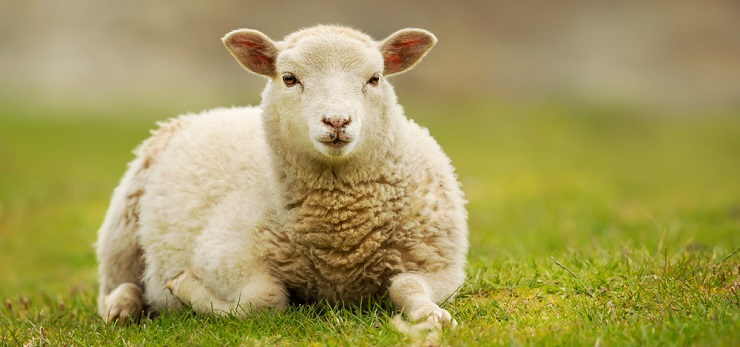
Please, March, in like a lamb.  Also, out like a lamb, if you don’t mind.  It’s just that I have much less tolerance for extremes in all things, and where I once enjoyed a good storm standing on the porch as if lashed to a spar, all dramatic with wild hair dripping spray, now I just want to nap.

It was a family trait, this standing in the open door as soon as the tornado sirens sounded.   My father started it, and then my siblings and I gathered close behind him, pushing for advantage to be the first one blown off to Oz.

I think it disgusted my mother, and she figured the sensible ones, if there were any, would return to the safety of, if not the basement, an interior room, and she never called for us, yelled at us, or pleaded.  She  wasn’t wasting her well-being or her breath on such a spectacular group of nincompoops.

I get my kicks on Netflix now, where I help my Scandinavian and British colleagues solve crime. I am in actual danger only rarely, like when I drop the remote and I have to crawl around to find it.  It hurts my knees and sometimes I get wedged between the wall and sofa, where I spend several upsetting minutes, contemplating my derisive attitude toward the Life Alert necklace, and feeling shame for how often I made fun  of “I’ve fallen and I can’t get up.”

I hope for a March of calm, one where the patio furniture stays put and the rains are gentle and restorative. I enjoy the sun slanting in that particular way as it arcs toward its summer home and the nights are cold, but only blanket cold, not big socks, down comforter, wear a toboggan to bed cold.  I hope for March mornings, brisk and bright.

March is meant to be spent wandering the home stores and Rural King. There are packets of seeds to peruse, new garden gloves to try on, hoses to access.  Hoses are the bane of my existence.  I used to buy cheap ones, but they kinked so horribly I bit the bullet and purchased a heavy duty hose.  While I was at it, I thought I should get one a hundred feet long, and I could barely drag it around my yard.  It crushed my tender flowers and I had to sit down throughout the chore of watering, because it exhausted me.

Now I pick up those lightweight pocket hoses when I see them on sale.  I treat them as consumables, knowing eventually they will rupture and die, and then I go to the garage and get another one from the shelf where they sit, stacked up like surplus paper towels.

March is for cleaning windows, the better to watch the fledgling spring arrive.  It is for sprucing up around the yard, raking, buying bags of mulch, painting the wrought iron on the rare warm day.  March gives us our last chance for snow, which will be thrilling to await, but disappointing upon arrival.  It will be a heavy snow and short-lived, and in a huff we will wonder why it didn’t have the good grace to show up on Christmas Eve.

March gets props because it puts an end to February, and we love that about it.  March prepares us for Easter, for planting, for moving our lives outside. We get that extra hour of light in the evening and we get to put away our heaviest clothes.  March points us, decidedly, toward spring, with dogwood and redbud and the scent of slowing warming earth. And about time.

Hearts and Flowers

There was a time when I had a suitor of such passion, bordering on obsession, that my mailbox was filled with Valentines, all with his name scrawled across the bottom.  I was “the apple of his eye.”  He pleaded, “Please be Mine!” The cards, pink and festooned with hearts, or red and lacy white, begged, complimented and angled to butter me up to cast an accepting eye his way.

I was secretly pleased by the attention, but a little embarrassed, too, and I did nothing to encourage him.  This only seemed to fuel his ardor.  His mother was concerned. I know this because she accosted my own mother one afternoon at the grocery.

“I want to talk to you about the children,” she said.  “This is getting out of hand and I am concerned.”

“They are just too young.  He must concentrate on his education,” she said, all fierce and insistent. 

Mother listened, standing there in the middle of the cereal aisle, and she was stunned, unsure how to respond.

We were eight.

Her son’s valentines had been stuffed in the shoe box I had decorated the day before, all red construction paper and doilies.  You hoped to get one valentine from every child in class, those flimsy cardboard things, stuffed in even flimsier envelopes.  My haul that year was magnificent, thanks to Mike.

Another Valentine’s Day, and I am away at college.  There, on the counter of the front desk of the dorm were flowers for me.  A dozen long-stemmed red roses, in a box.  A box. With a little cellophane window, and a card attached to it.  I rearranged the card so my name was more visible to all who passed by, and left them there for over an hour for full effect.

I wonder now what I would have done with long-stemmed roses.  In a tiny dorm room, cell-like and spartan, I can’t imagine I had a vase sufficient to hold them.  Perhaps the hall director loaned me one.

But to this day I can attest these were the best flowers I ever received for the sheer drama of it, and I remember them, and the boy who sent them.

And then, this other Valentine’s Day. 

My pal, Alice, and I were in the habit of spending Thursday afternoons together, under the premise of writing our great works.  We wrote together exactly once.  We continued to meet each Thursday—her husband was out of town every Thursday night, so she was a free agent —and we took advantage of the time to poke around town and go out to eat.

We are not particularly fussy about where we go, yet we are indecisive.  We spend lots of time not caring and then rejecting every suggestion made by the other, until we finally settle, half an hour later, on our destination.

This one rainy February Thursday we headed out into the dark, looking forward to our dinners at a place we agreed upon quickly.  The parking lot was full.  People were huddled under the awning.  We didn’t even bother pulling into the parking lot.  We were surprised, but flexible, so we headed toward our second choice.

Same thing.  Overflowing parking lot.  People spilling out the door.  And the third place. Same.  The traffic, too, just terrible for six o’clock on a Thursday night.

We settled on our favorite Mexican place because there were spaces left to park.  We stood crushed against the patrons waiting to be seated, the door half-open, letting in waves of cold air and rain. I wondered out loud what was going on, we had never seen it so crowded on a weeknight.

“It’s Valentine’s Day,” a helpful woman said.  We laughed at ourselves for not knowing, our lives so pitiful the day slipped our notice.  They laughed at us, too, those couples who were making the questionable choice of Mexican on this night, but perhaps they couldn’t get in their first choice, either.

And now that one, too, is a memorable Valentine’s Day. When Alice and I think we are in the mood for Mexican food, we no longer call it by its name, but rather “our special place.”  If we are out tearing up the roads and we see the restaurant is having a busy day, one of us might mutter,  “Must be Valentine’s Day.”

And that is just fine, too. I’ll take it all—the little cards from smitten boys, the flowers, old friends, and dear hearts.  Just as St. Valentine intended.

A New Decade — Here We Come

Wednesday marked  not just the new year, but a new decade, at least it seems that it is marking the new decade. In truth, 2020 is the last year of the teens—the last year in a series of ten. But there is something nice and round, satisfying pleasant about beginning a decade or century or millennium with a number ending with zero, so that is what we do.

If you are a stickler, you can view this as the last year to get it right, prepare and reshape yourself for the new decade to come. Or you can jump right in with wild declarations and bold plans and good on ya, I say.

I have chosen a hybrid approach, taking this new year as a time of fine-tuning, casting off some worn out ways, adopting some new ones. I think of 2020 as the first year in a fresh decade but it will be a year of transition, too, so I have some practicing to do to get it right before the ’20s begin in earnest.

I spent much of the past eighteen months working on my health, my weight in particular, and I had some small success. Then I went to France. They celebrate food there, and wine, and both are fabulous. I did my best to fit in.

I fit in very well.

It wrecked what small accomplishment I might have made, and over a year later I am trying to get back to the plan that worked for me, sans French bread and cheese, paté and aperol spritzers.

After a lifetime of obligation and work and taking everything very hard, 2020 will see a bit of change in my free time. You would think this is a joyous thing, but trust me when I say, I am not so sure. I enjoy a good gripe, and there is nothing more satisfying than complaining about the terrible constriction of time you are under, to the concerned cooing of caring friends.

It lets you off the hook for the beds being unmade, the vacuum sitting in the middle of the floor, a sink full of dishes. You are an object of pity and concern.

However, be able to go to bed without setting an alarm, have most of the day at your disposal, at least the flexibility to plan as you see fit, and those dishes in the sink — and you — become objects of scorn.

I scorn myself.

A decade yawning before you is a long time and the changes it brings are huge. That two-year old toddler will be twelve at the end of it. A delightful, or more likely, sullen, child working on the perfect combo of sneer and disgust and ennui that every teenager masters. Ten more years and they are grown, facing the world as a newly minted adult, a little fearful but excited.

If you are just starting work and a career, the 2020s will represent one quarter of your work life. Sit with that a minute. Sobering, no? If you are mid-career, the next ten years will represent the time of your most fruitful earning, the time when you arrive, whatever that means.

For some of us, the last of the baby boomers, the new decade will see the end of work and the start of retirement. Some of us will putter around our yards, some of us will putter around Europe, some of us will putter around quietly while the grandchildren sleep.

The decades I passed in my early life came and went without much notice. I didn’t even know what a decade was until I was fourth grade or so. Then time was marked by weeks, with Christmas and birthdays and summer holidays gauzy dreams in a land I couldn’t quite imagine.

Most of my adulthood I made note off decades approaching, made big plans, declared my intentions for self-improvement, career moves, lifestyle changes, and then abandoned most of them in the moment of expediency, practicality, or distraction. We say we want certain things, but the universe doesn’t always agree, and sometimes we are just too tired or bothered to put forth much effort.

I’m wondering, baby boomer that I am, what the next decade will bring, what it will look like, as one kind of work ends and another begins. I am making plans, of course. I have new pens and notebooks to keep track of it. For a month or so, anyway. Let’s get cracking.