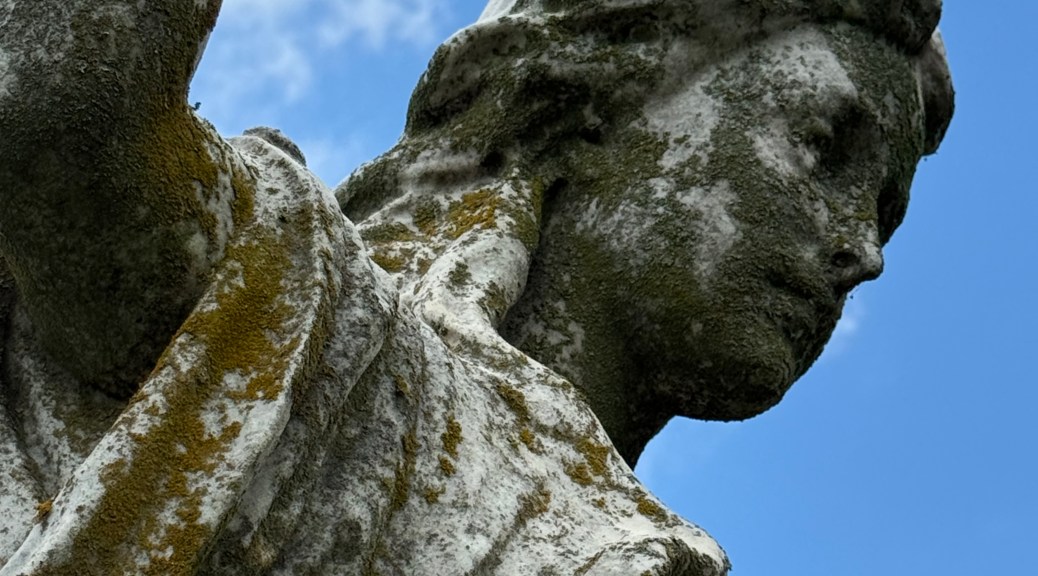
My grandmother called it Decoration Day and told stories of picnicking among the stones of her departed family members, in a prairie cemetery in Indian Territory, in what is now east Oklahoma. The Paxtons would descend on the windswept and flat parcel of land and spend the whole day. They sang. They played games. They cleaned the graves of dead flowers and planted new ones to be buffeted by the wind, but that was just fine, because it gave the impression of dancing, those bobbing heads, in a stark and lonely place, there, on the outskirts of town.
I think she wanted us to recreate the picnic at Elmwood Cemetery or, rather, she wished we could, but knew such a thing would be impossible, unseemly, not done. The story appalled my mother. But Granny never failed to mention it on those long-ago Saturday mornings as she popped the trunk and hauled out tools, watering cans and washtubs full of flowers.
We followed her, our Keds and Red Ball Jets growing wet at the toes, then cold and uncomfortable as we trudged up the small rise to the place where our people lay, all of them, a case of serendipity having orchestrated both sets of grandparents with plots in spitting distance of each other.
“Look for the statute of the girl missing a finger,” she called over her shoulder. “That is our landmark.” And there she is, Bernice Fitts, who left this world at the age of eighteen, a giantess missing a finger, pointing, and not pointing, in the direction of the grandfather I never knew.
We were always excited, but subdued, too. We understood, as much as we were able, that this was a solemn duty and there were things here, mysterious and big, echoes of Sunday sermons, bellies of whales, lion’s dens, the dead to rise again. All of it scary and thrilling and incomprehensible.
But it was fun, too. An outing. A tradition. We were not a family to visit the cemetery regularly; we didn’t decorate graves for the seasons, on holidays or the birthdays of the departed. We might wander up to Elmwood on a pretty day, a moody afternoon, but never to linger.
Yet, Memorial Day was sacred, although we never used that word. But to ignore it, to miss one, would wrack me with guilt, and my sister, too.
Now, we call up, half-ashamed, asking if the other has taken flowers to the cemetery, hoping the answer is yes, so we are off the hook. The answer is always, no. We scurry around then, and gather plants and a watering can, and tend the graves in the most perfunctory of ways. But we feel better afterward, and both of us sigh with relief and satisfaction as we pull out onto Breckenridge and get on with our day. A duty done.
My mother was in the habit there toward the end of buying hanging baskets she would place on the graves and retrieve later for her summer garden. This was a great idea I thought, yet it worried her someone would steal them, so she sent me out early on Tuesday morning to bring them home. And people do steal them. Never our pots because they weren’t special, just some impatiens, still too small to make much of a display, but the nice ones, the specially made arrangements, these disappear.
We need not discuss what makes people do this, how low-bred, how disrespectful. We know exactly the sort to help themselves to a remembrance left for a loved one. To dwell on it is to wish for a stone hut on an isolated island in which to live out our days, away from people, just about all of them. To give up on them.
And some days I do give up on them. But not most days.
And some days I remember so clearly being a child of four, seven, ten.
The cool and damp of a May morning, the bucket of peonies in my grandmother’s trunk, children running in a game to find their grandparents who are only stories to them, faded photos, this gray stone. Another child, or just so recently a child, her head bending on a slender neck, her upraised and fingerless hand, showing the way.
 Greta McDonough